

Project provides new home for people, plants
By Nusha Ramsoondar
NORTH BAY – A new project in downtown North Bay will provide transitional housing for up to 30 Indigenous clients and a new home for plant seedlings collected by an Elder at the construction site.
On Sept. 11, staff at the North Bay Indigenous Friendship Centre (NBIFC) gathered to honour the land at 995 Cassells Street, days before the scheduled demolition of the two empty houses standing there. Lorraine Whiteduck-Liberty, an Anishinaabe Grandmother/Elder from Nipissing First Nation, led the ceremony with a solemn reminder, “Appreciate what the land has given us over time, and give our time to the land in return.”
“My first thought is the Mother, the Earth,” Whiteduck-Liberty explains. “She provides for the two-legged, the four-legged, the winged creatures. When she is disturbed… it’s like we’re taking and mistreating her life.”
In her teaching, Whiteduck-Liberty emphasizes the importance of mindfulness when changing the landscape. Staff attending the ceremony offered semaa – tobacco – to various plants and trees on the property to show their respect for what the land has given until now. In a concept reflective of Anishinaabe values, Suswin Village has been designed from the start to embody and promote respect for the land throughout all phases of implementation.
“How long have those trees been cleaning the air for us?” Whiteduck-Liberty asks. “She gratefully sustains this to us: her plant life, her medicines.”
Whiteduck-Liberty’s teaching isn’t new. This respect and appreciation for the Earth has been passed down in Anishinaabe culture for hundreds of years. Each bit of Earth – the grass, the trees, the plants, the water – gives something to humans: clean air, water, food, shelter. In return, Whiteduck-Liberty says, “We have to honour the land”. It is, perhaps, bitter irony that this idea is reiterated at a time where the Western world scrambles to promote environmental care in light of the current “climate crisis”. As modern environmentalists urge the world to condemn single-use plastics and to instead take care of our planet, Whiteduck-Liberty’s centuries-old teaching highlights the bottom line as we know it: the Earth is alive and it is our responsibility to mindfully care for it. The Anishinaabe knew this long before it became a mainstream idea, and it is only very recently that Indigenous knowledge is being recognized for its influence on environmental sustainability.
The creation of Suswin Village is a positive disruption to the land.
“It is a disturbance that is going to help the people,” Whiteduck-Liberty explains.
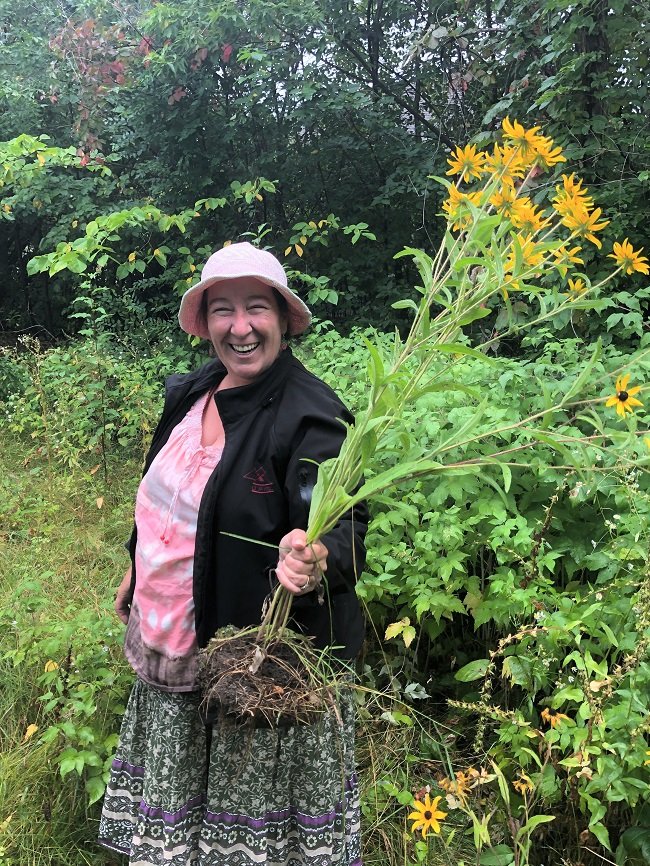
NBIFC staff chose young plants to be cared for in their own homes until Suswin Village is fully built, at which time they plan to return the plants to the land. The now-empty plot of land represents a fresh beginning – an opportunity for change, growth, and perhaps most importantly, hope. Slated for a 2021 opening, Suswin Village represents hope for a good life for Indigenous peoples in North Bay. The 30-unit complex, efficiently designed to be both functional and beautiful, offers a chance for Indigenous peoples facing homelessness – or those at risk of homelessness – to improve their circumstances with the help of a myriad of health and social services just across the street.
“We are all looking for minobimaadziwin, living a good life. Maybe what we do there will create that.”