

Fur Harvesters Trappers Convention 2026 evokes fond memories
By Kelly Anne Smith
NORTH BAY – The Fur Harvesters Auction’s Annual Trappers Convention 2026 was a welcome event for trappers and their supporters on January 9-10. Some bring in their furs to the convention, but the main reason is to take in the fur demonstrations on skinning, handling, and competitions.
Most of the kiosks are trapper councils – groups of trappers from different areas in the province. Trappers attended from Alberta and the United States as well. There were vendors selling equipment, knives, and fur. Doug Chiasson, executive director of the Fur Institute of Canada, says North Bay is important to the global fur trade.
“Not a lot of people outside of my industry think of it this way, but North Bay is really an epicentre for the global fur industry. Fur Harvesters Auction is a place that brings in buyers from all across the world that are looking to get access to the best wild furs the world has to offer.”
Chiasson sees encouraging signs for the wild fur sector this year.
“We’re expecting strong prices on wild fur this year, especially on things like bobcats and lynx, as well as marten and wild mink, which will be good for trappers here in Northern Ontario.”
Chiasson says his field is emerging from the industry-busting pandemic phase, but global conflicts also impact trappers.
“[COVID-19] was a big blow to us, as is the war in Ukraine. Russia was a major market for Canadian fur that is now inaccessible to us due to sanctions. And Ukraine was an important and growing fur market for us. Certainly, there are many reasons to want the hostilities in Ukraine to come to an end that are more important than fur, but it had an impact on our industry.”
There is a strong Indigenous presence on the traplines, says Chiasson.
“The reality being for our industry is probably about half of the trappers in Canada are Indigenous. There is still a very important through line of our shared history that is Indigenous fur harvesting and trading of furs with and between Indigenous peoples.”
Chiasson also ensures that conservation is top-of-mind for trappers.
“It’s making sure that we’re taking only what nature can allow and that we are not causing any undue stress to the ecosystem. The trappers themselves are, in a lot of ways, on the front line of conservation.”
Wayne Hamilton has been trapping since 1958, starting with his grandfather and now running the zone that was his grandfather’s, the North East Parry Sound. Hamilton says the smaller waterways in his area are not running as high.
“Fishers and martens are doing ok, but the beaver population is down. I think a lot of that is the water. In my area, all the creeks and ponds are way down in water. People blame wolves, but where I am, the wolves aren’t there, so I know they’re not a problem. My zone takes in Restoule and north of there along the provincial park. The zone beside me (Restoule village and area) is having problems that way. And the guy south of Restoule – his population of beaver is way down.”
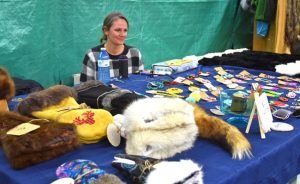
Natasha Chartrand of The Damed Beaver Company, a settler with roots in the Red River Métis and a fourth-generation trapper who enjoys FHA’s Annual Trapper Convention, was selling beaded earrings and fur mitts and hats.
“It was such a good weekend. It’s always fun at the Trappers Convention. It’s the first year I got to attend since COVID.”
Chartrand has noticed the younger generation seems to be looking for natural, ethically-sourced material.
“My fur comes from the trapline and is ethically sourced. I don’t like to waste part of an animal that’s given its life…I do think there are a lot of teachings nowadays versus in the past around trapping and fur harvesting and hunting. Our traps are becoming more humane. In the States, they can use a leg hold where it doesn’t kill the animal. It just holds them there. Where for Ontario, the concept is an instant death.”
Faye Naveau, from Mattagami First Nation and a mental health worker with Wabun Tribal Council, travelled to the Fur Harvesters Auction Convention and had a rush of memory when she walked through the door.
“My Dad was a trapper. For probably the first 45 years of his life, he did a lot of trapping. He lived off the land with his parents in the trapper’s cabins in the bush. When I was a teenager, I got to know him a little bit. And I got to go on the trapline with him. But unfortunately, my mindset wasn’t in trapping. It was more into having fun. I know I used to wake up at three o’clock in the morning and he’d be skinning and putting the beaver on the boards by oil lanterns. We lived on the reserve and there was no hydro then. And when I walked in here (Fur Harvesters Auction Inc.), I thought, ‘Oh my god, it smells like my Dad’s house.’ My Dad just passed November 14th. He was my number one cheerleader. I wish I would have been able to come here with him when I was younger and I wish I would have had that opportunity to know him and to grow up on the land with him instead of the way that we did. This is just so nostalgic for me.”
“Coming here was a reset and helping me to reevaluate what’s important. We get really caught up in the disposable lifestyle that we live in. When you work for and you create what you need from the land, it holds a whole different meaning. And it’s a lot healthier for you because you’re not pulling in all of the toxins from all of the stuff that they spray and treat things with and make things out of synthetic materials which is very harmful for us. So, when we go back to the land, we’re getting connected… Just being here, the smell and seeing all the furs, I feel really connected to my Dad right now.”
The Fur Harvesters Auction’s Annual Trappers Convention 2026 also included the Fur Fashion Show by New York Furs, a live auction, and demonstrations such as fur skinning and handling, trapping techniques, and wild fur grading.