

Anishinabek Nation kicks off campaign to support Bill S-2
By Kirk Titmuss
ANISHINABEK NATION TERRITORY – The Anishinabek Nation held a webinar on January 22 to drum up support from member First Nations’ leaders and citizens for Bill S-2, An Act to Amend the Indian Act (new registration entitlements), as it makes its way through the House of Commons in Ottawa.
In a call-to-action, representatives from the Anishinabek Nation spoke passionately about the need to get behind the Bill, which received First Reading on December 10, 2025, for preserving the Nation’s future.
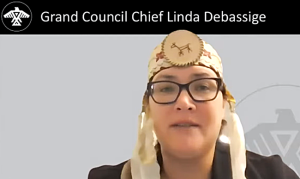
Anishinabek Nation Grand Council Chief Linda Debassige urged everyone to get behind the campaign to ensure there would be an Anishinabek Nation in decades to come.
“I urge our Chiefs and every citizen – women, men, youth, Elders – to engage with their Members of Parliament to end the stark discrimination against First Nations citizens and stop the legal extinction of First Nations people under its laws.”
Bill S-2 proposes major amendments to the Indian Act registration process. Most importantly, it calls for the restoration of Indian status eligibility for enfranchised (those who lost Indian status) First Nations people and their direct descendants. However, Bill S-2 does not address the discriminatory Second-Generation Cut-Off, which only allows First Nation people to pass down their Indian status to their children if both parents have Indian status.
The Anishinabek Nation wants the One-Parent Rule to be applied, which only requires one parent to have Indian Status. To the Anishinabek Nation’s frustration, Indigenous Services of Canada (ISC) Minister Mandy Gull-Masty has stated that more consultation is needed with First Nations before the Second-Generation Cut-Off is dealt with.
The original goal of the restrictive process was as a tool of assimilation implemented by Canada in 1985 as part of Bill C-3, An Act to amend the Indian Act. Over time, it would erase Indigenous identity and culture and thereby eliminate the “Indian Problem”, a term coined back in the 1800s in both Canada and the United States. It soon became a common label and was used in government discourse of the day. In 1920, Duncan Campbell Scott, then Superintendent of Indian Affairs, stated that by assimilating Indigenous people into Canadian society, it would “get rid of the Indian problem”.
“Only we have the authority to determine who belongs,” stated Grand Council Chief Debassige.
Anishinabek Nation Southeast Regional Chief Marsha Smoke took an urgent tone as she addressed the virtual viewers, encouraging them to recognize their inherent power as the Anishinabek Nation.
“Remember Idle No More? Remember Ipperwash? Remember when First Nations rose up to preserve our Ontario point-of-sale tax exemption? That was the Anishinabek Nation leading that. Well, here we are again. This time, it’s Section 6 (Indian status eligibility) of the Indian Act. And this time, it’s for our families, for our relatives, for our children, and for our future.”
Dr. Jeannette Corbiere Lavell, Anishinabek Nation E-Niigaanwidood E’Dbendaagzijig (Citizenship Commissioner) has been battling the issue of E’Dbendaagzijig (Citizenship) long before she was appointed Commissioner on Citizenship in 2007. In 1972, she won her legal challenge on Enfranchisement – Section 12(1) (b) of the Indian Act in the Ontario Court of Appeals after she lost her Indian status from marrying a non-First Nations man.
“We are engaged in a process with Canada on First Nation membership,” she said.
Now, she is putting her efforts behind getting Canada’s recognition for the Anishinabek Nation Declaration on E’Dbendaagzijig Naaknigewin (Citizenship Law), which establishes First Nations’ right to determine who their citizens are, taking that process out of the hands of the government, despite Canada’s stated intention to eliminate the Indian Act down the road.
“Canada intends to eventually do away with the Indian Act altogether, but on their terms, not ours. This is why it is important to engage in this process. We must protect our people and our rights. We must keep Canada accountable until a new relationship based on respect, reciprocity, mutual responsibility, and renewal can be achieved.”
On October 21, 2025, Commissioner Corbiere Lavell—one of a three-woman panel calling for an end to the Indian Act’s sex and race-based discrimination—addressed the Standing Senate Committee on Indigenous Peoples to speak on Bill S-2. While Bill S-2 addresses some aspects of enfranchisement, it fails to recognize First Nation autonomy in determining citizenship.
“As Commissioner for the Anishinabek Nation, I advocate for E’Dbendaagzijig. In February 2025, we adopted the Anishinabek Nation Declaration on E’Dbendaagzijig, which expresses the foundation of our jurisdiction and First Nations citizenship laws.”
She pointed to the irony of Canada’s approach to citizenship with other parties.
“Canada will not recognize our people and our rights, yet it will recognize self-identifying groups with no Aboriginal title and treaty rights and even fund them.”
Lois Taylor, a Curve Lake First Nation resident, explained how she had been working on her community’s membership for over eight years. She says ISC’s insistence on further consultation with First Nations regarding the Second-Generation Cut-Off before it considers removing it from the Indian Act is “outrageous” and “heartbreaking” to children in her community who can’t be registered with Indian status.
“They grow up surrounded by friends and family who are, and they don’t necessarily understand that. They’re being denied services. They’re being treated as an outsider by their own. They can’t access programming. They can’t access housing. They can’t own land. Sometimes, even daycare is affected if there are more registered children than them. But they’re still very much members of the community. We shouldn’t have children of the same bloodline with different entitlements.”
Second reading on Bill S-2 is expected to take place soon. After that, it will be referred to the House of Commons Standing Committee on Indigenous and Northern Affairs. It is then that the Honourable Mandy Gull-Masty can apply the amendments submitted by the Senate, including removing the Second-Generation Cut-Off and implementing One-Parent Rule. It will then go back to the House of Commons for Third Reading, and lastly, forwarded for Royal Assent and made law.
“Our Nation’s rights again have been gained incrementally over time. So, the more we push, the more we can get, and we’ve just got to keep pushing on those things (amendments to Bill S-2),” advised Grand Council Chief Debassige.
To have your voice heard on Bill S-2 before it becomes law, the Anishinabek Nation encourages you to write to your local MP or Indigenous Services of Canada Minister Mandy Gull-Masty in Ottawa.