

Opening doors to opportunity: Former Algonquins of Pikwàkanagàn First Nation Chief Clifford Meness honoured for transforming natural resource development in First Nations
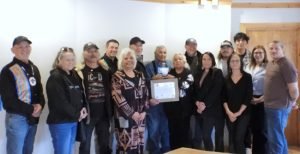
ALGONQUINS OF PIKWÀKANAGÀN FIRST NATION—A visionary leader whose work reshaped the future of natural resource development in First Nations, former Chief of the Algonquins of Pikwàkanagàn First Nation Clifford Meness was recently recognized for opening doors where few once existed. Through determination, collaboration, and a deep commitment to community prosperity, his legacy has helped create lasting opportunities across Ontario—empowering First Nations to take a stronger role in stewarding and benefiting from their lands.
“Clifford (Cliff) Meness was the mastermind behind creating the co-managed Anishinabek/Ontario Fisheries Resource Centre (A/OFRC). The organization serves as the connecting link between the 39 Anishinabek Nations and the province when it comes to fisheries management,” said Scott McLeod, Anishinabek Nation Lake Huron Regional Chief.
Over the past 28 years, the A/OFRC has delivered more than 150 fisheries projects in partnership with First Nations and government agencies. These initiatives have included surveys, index netting, tagging studies, fish habitat inventories, and the idea of creating existing fisheries data to support the development of Resource Management Plans. Most projects were led by host First Nations with support from the A/OFRC, while others were carried out by the A/OFRC on their behalf.
Guidance for the A/OFRC is provided by a Board of Directors comprised of academic leaders, fishers, fisheries researchers, and tourism and resource management professionals. The Ontario Minister of Natural Resources and the Anishinabek Nation Grand Council Chief each appoint four directors, while the chairperson—who is always Indigenous—is jointly selected. With equal representation of Indigenous and non-Indigenous members, the Board ensures a balanced and collaborative approach to decision-making.
Lake Huron Regional Chief McLeod reiterated that they’re now looking at more initiatives in First Nations revolving around fisheries management. The A/OFRC now has a staff of roughly a dozen who work on behalf of the First Nations, pushing to build capacity and help other First Nations with Natural Resources departments train technicians to do the necessary work for their communities.