

Book review: North of Nowhere: Song of a Truth and Reconciliation Commissioner
 Reviewed by Karl Hele
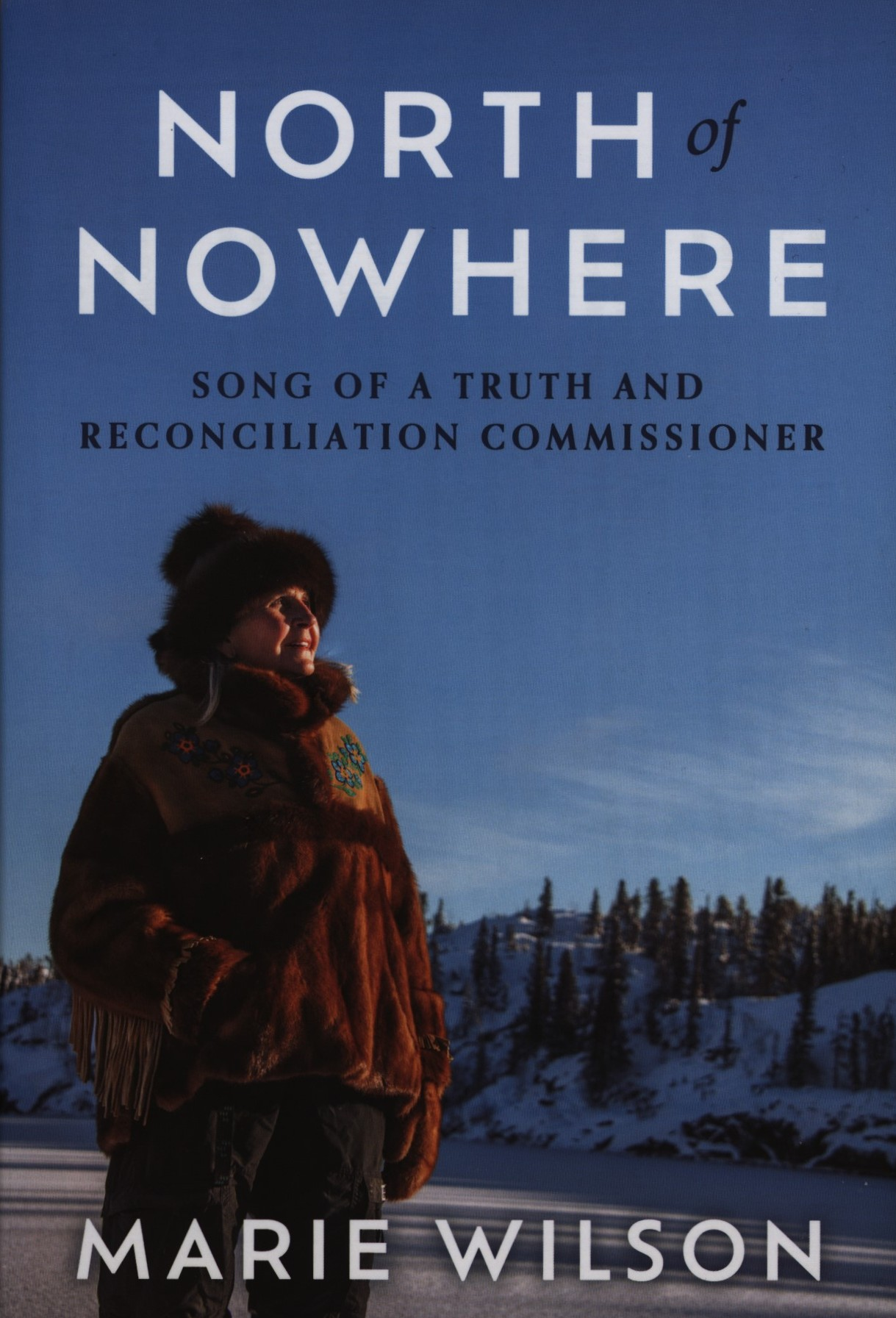
North of Nowhere: Song of a Truth and Reconciliation Commissioner is a rough, emotional, evocative, and compelling read. The monograph is at once a story of Marie Wilson’s experiences as a Truth and Reconciliation Commissioner and a story of Indian Residential School Survivors. Wilson skillfully weaves parts of her life’s journey into her work with the Commission. Throughout the volume, Wilson offers lessons she learned, often taught to her by Elders and fellow commissioners, as well as through the heartfelt stories and words of wisdom by the Survivors themselves. Simply, North of Nowhere offers a unique and compelling look into the Truth and Reconciliation Commission (TRC), Survivors’ power, and Wilson’s role. Importantly, this is a powerful and compelling story that readers must navigate with caution and mindfulness, as it may reawaken or trigger traumas.
North of Nowhere’s structure follows the same path as the TRC undertook from 2007 to 2015. Wilson begins by centring the work on home, community, and family – key elements of identity and personhood that the Indian Residential Schools severed and damaged for Indigenous children across Canada. Part 1 discusses the creation of the Commission and its important grounding of ‘do no harm’, as well as its organization and initial meetings of the three commissioners – Murray Sinclair, Chief Wilton Littlechild, and Marie Wilson. It is important to note that Wilson was a non-Indigenous woman selected by a rigorous process that centred on ability and Indigenous support. The next seven sections – Respect, Courage, Love, Truth, Humility, Honesty, and Wisdom – which encompass two chapters each, are drawn from each National Event hosted by the TRC across Canada. These seven sections drawing from the National Events foci are utilized by Wilson to shape her evolving experiences, lessons, and growing voices of the Survivors speaking at the various events.
For instance, “Part VI: Humility” is drawn from the National Event held in Montreal. Like the other sections of the book, Wilson remembers her personal experiences from Quebec, such as how it felt to learn that she would be mother soon or to be student on exchange learning French. These experiences are woven into how she experienced the stories of Survivors being wrenched from their parents and placed in different Indian Residential Schools where they lost their ability to speak Cree while learning French and English separately. In the end, the brothers could no longer communicate with each other and their family in Cree, nor could they speak to each as one understood only French and the other only English. She also discussed how Survivors’ memories could be triggered by seemingly mundane objects, words, sounds, or smells (214). Wilson concludes this section by calling for humility from Canadians, the humility to look at the past to understand how to move forward. Similarly, “Part VII: Honesty”, which was the focus of the public event in Vancouver, Wilson offers words and thoughts about Canadians being honest with themselves and each other as the Survivors who spoke were being honest with themselves and each other because “with Honesty, we were inching our way toward Wisdom” (250). The final sections, “Part IX: The Ending is Just the Beginning” and the “Epilogue,” provide a vision of hope and self-reflection, while expressing her continuing efforts to keep Canada’s history of Indian Residential Schools and missing children at the forefront. These last two sections also return to the lessons learned from the Survivors – that love and its expression is a healing force for community, family, and individuals, as is learning how to forgive and let go while continuing to remember.
While North of Nowhere is presented from Wilson’s perspective and experiences with the TRC, the work remains focussed on the Survivors, their words, and experiences. It is clear that Wilson was deeply humbled, shocked, and educated by the Survivors. To convey her experience in the book, the words of the Survivors are centred in all their ‘Respect, Courage, Love, Truth, Humility, Honesty, and Wisdom’. Wilson’s text only sharpens and directs the reader’s attention to the importance of the lessons she not only learned but feels all Canadians need to learn. This blending of personal experiences, growth, humility, knowledge, and self-awareness through the voices and events of the TRC can make the book emotionally draining to read.
Although an important work, I do have a minor quibble with Commissioner Wilson’s text. She describes Residential School as being operated by the generic “Catholic and Protestant Churches”. I feel that the Protestant Churches need to be clearly identified – Anglican, United Church, Presbyterian, Mennonite, and Baptist. In my experience, most Canadians seem to believe that all the schools were run entirely by the Catholic Church, particularly the Jesuits. And, that the notion of Protestant is limited to a vague idea of non-Catholic that is not tied to their particular version of Christianity. This ‘lack of knowledge’ or ‘lack of awareness’ allows individuals, and the larger society, to avoid acknowledging or thinking too deeply about the extent and involvement of Canadian churches. Wilson does occasionally acknowledge the complicity of her Church – the United – for its role, particularly during tests of her Christian faith. She also hints indirectly that the Residential Schools in Quebec were operated entirely by the Catholic Church. I learned, through a Survivors conference I helped organize with Dr. M.-P. Bousquet, that one Quebec school was operated by the Anglican Church of Canada. While I recognize that the generic ‘Catholic and Protestant Churches’ was utilized to focus the reader on the similarity of experiences across denominationally-run schools and the lessons people need to take away, it would have been nice to see the denominations called to the floor. As I noted, the quibble is minor and draws from years of hearing students deny and fail to recognize how their adhered-to version of Christianity caused harm. As Wilson notes throughout North of Nowhere, it is an ongoing learning journey that we have all embarked upon.
North of Nowhere is an absolute must-read for everyone. It does come with a trigger warning; student testimonies and the overall experiences described by Wilson will make you think, feel, and connect. I would not recommend this work for anyone under 18, and I offer a word of caution for Survivors and their families seeking to read Wilson’s work. Deniers in all forms need to read this book. It would take a heart of stone and a mind devoid to continue with the delusion of denial. Commissioner Wilson’s engaging, heartfelt, and powerful work shows how connection and love are absolutely needed for all human relations.
North of Nowhere is also a testament to the power and healing ability of spirituality for both Indigenous and Christian peoples. Spirituality infused all aspects of the TRC, helped heal and strengthen all its participants, and remains central to Wilson’s message. Moreover, the book is a testament to the need to tell the truth about Canada’s history. Finally, North of Nowhere is a testament to the human spirit, its potential for resiliency, and the importance of community, family, and individuals through Respect, Courage, Love, Truth, Humility, Honesty, and Wisdom.
Marie Wilson, North of Nowhere: Song of a Truth and Reconciliation Commissioner. Toronto: House of Anansi Press, 2024.
ISBN 978-1487011482