

Book review: Ally is a Verb: A Guide to Reconciliation with Indigenous Peoples
 Reviewed by Karl Hele
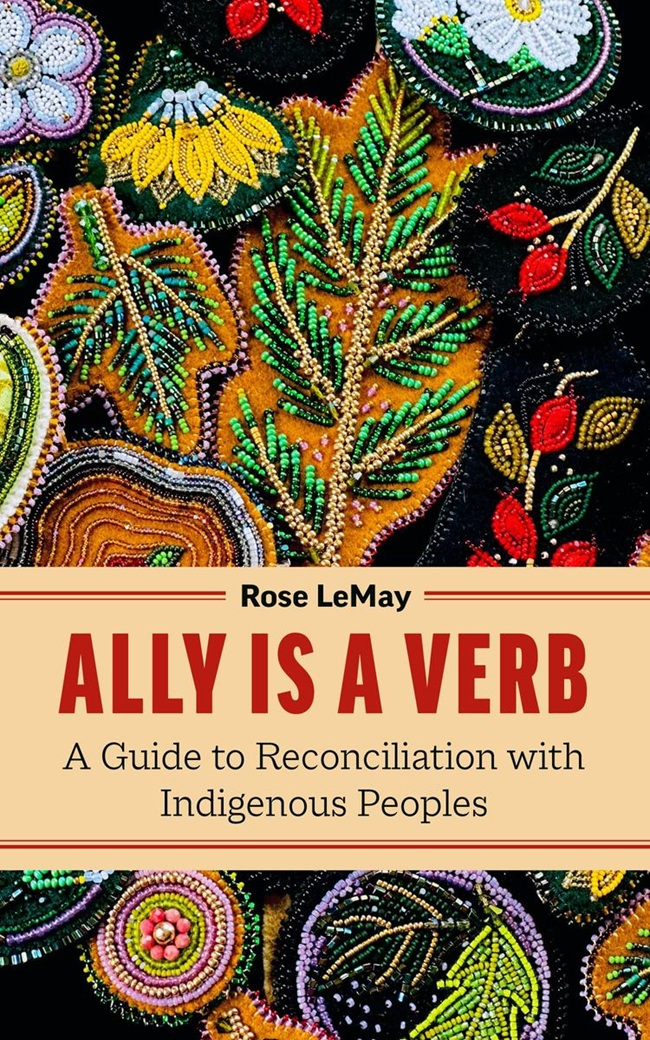
Rose LeMay’s Ally is a Verb: A Guide to Reconciliation with Indigenous Peoples is a definitive guide and resource for non-Indigenous Canadians seeking information on how to become an ally and walk the path of reconciliation. The idea of ally as a verb is a direct and poignant reminder that being an ally is not a title, an award, or something that is self-proclaimed. Instead, being an ally is an action, one that requires educating oneself about Canada’s history and Indigenous history, it is about empathy, it is about stepping forward and challenging racism, it is about showing up to support and walk behind Indigenous peoples, it is about living a life that seeks to create a better place in society for everyone and so much more. Importantly, LeMay reminds people that being an ally involves actively supporting while stepping back. Anyone reading Ally is a Verb: A Guide to Reconciliation with Indigenous Peoples will discover pathways to engage, at your comfort level, with the process of reconciliation through allyship. Ally is a Verb: A Guide to Reconciliation with Indigenous Peoples will offer readers a pathway to effective allyship in a good way thereby allowing individuals to contribute to meaningful change in society.
Ally is a Verb: A Guide to Reconciliation with Indigenous Peoples is divided into seven sections, each explaining aspects of what it takes to be an ally while offering education about, what LeMay calls, the “Great Canadian Lie” (31-64).
Chapter 1 speaks of how reconciliation starts with an individual, noting that we cannot rely on Canada or corporations to create reconciliation. Chapter 2 unpacks the Great Canadian Lie with a quick 30-page romp through Canadian history since contact. Simply, the Great Canadian Lie is the benevolence of Canada’s Indian policies and that its founders “did the best they could to help those Indigenous people out of their ‘savageness’”(25). Reconciliation and allyship is about challenging and undoing this Great Canadian Lie. Chapter 3 speaks about the need to challenge racism by speaking up when you witness it, by challenging notions “but I didn’t mean it” or “it’s just one bad apple” racism (78-80). She does not advocate placing oneself in danger; instead, LeMay wants allies to ‘call people in’, ‘for you to speak out’, and ‘model how you want society to be’ – free of racism, discrimination, and prejudice where all people feel safe. Chapter 4 offers advice on challenging institutional racism in part by demanding more from our politicians and other public figures. Chapter 5 speaks to lending your voice and using your privilege to open space and amplify messaging. Chapter 6 explains that allies need to be comfortable with discomfort. Simply, if you are not uncomfortable then you are not fully engaged as an ally. Finally, in Chapter 7 LeMay addresses the need to maintain hope and a vision, not a naive hope, but one centred on creating a better society by walking with a vision of where the path of reconciliation is headed. Together, the chapters are an inspiring mixture of history, advice, knowledge, and teachings that offer encouragement and guidance for those seeking to be allies.
Although it is palpable at times, the written tone of LeMay’s Ally is a Verb: A Guide to Reconciliation with Indigenous Peoples is not angry or aggressive nor does it speak down to potential non-Indigenous allies. Instead, the tone is one of an educator who is seeking to encourage, educate, and guide people to become better allies. Part of this educational aspect is seen at the end of each chapter, where LeMay offers “next steps” and resources to aid in taking those steps. Interestingly, and importantly, LeMay avoids answering the question asked by many non-Indigenous Canadians – What do you want me to do? – instead, she offers a how-to and direction on doing, but leaves the ‘what’ up to the ally.
Like all books designed to offer a snapshot, there are historical glosses, assumptions, interpretations, and conclusions that further reading and education may uncover as not entirely accurate or correct. For instance, LeMay regularly claims that the Indian Act is unconstitutional without a concrete explanation beyond stating the obvious truth that it is racist in origin and intent, as well as the unlikelihood of it being passed into law in the twenty-first century. I would love to see this explained in further detail or at least a resource reference. I find it is the constitutionality of the Indian Act and its continued existence that is a key part of the Great Canadian Lie. Nonetheless, the historical glosses and assumptions, as well as the unconstitutionality statement tied to the Indian Act, do not detract from the overall importance of the work or the impact of LeMay’s words.
While Ally is a Verb: A Guide to Reconciliation with Indigenous Peoples is not meant for Indigenous readers, I would recommend that we all take a few moments to read the book. I read it with the intent of introducing it to university students and fellow faculty, as well as non-Indigenous friends outside of the academy. It also offers good explanations and aids when we are asked about allyship or faced with the question, “What do you want me to do?” I will simply reply, “I want you to read Ally is a Verb: A Guide to Reconciliation with Indigenous Peoples and what you do from there is up to you.”
Rose LeMay, Ally is a Verb: A Guide to Reconciliation with Indigenous Peoples. Vancouver: Page Two, 2025.
ISBN 1774585774