

First Nations’ health dependent on the health of the planet
By Kelly Anne Smith
LONDON — A well-respected professor and researcher holds out hope for the health of our planet and First Nations.
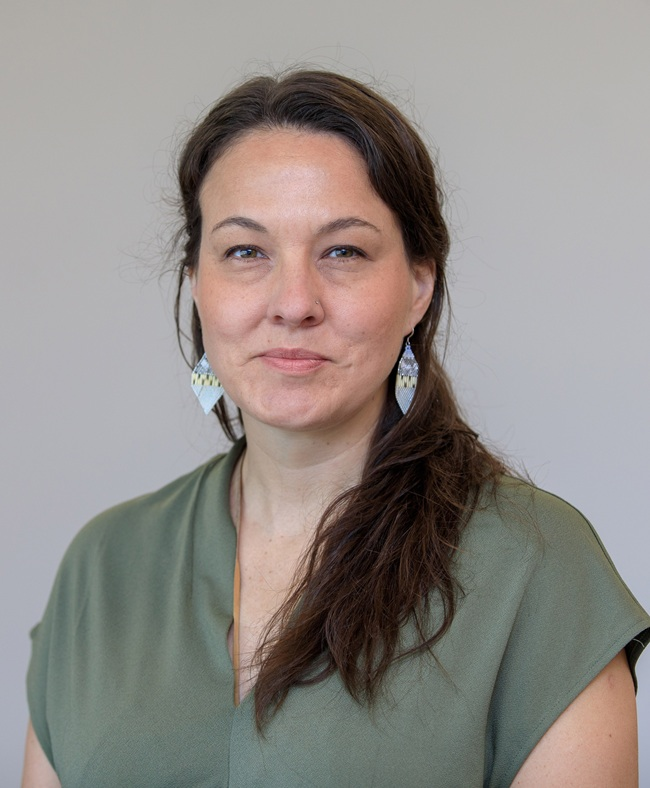
Dr. Nicole Redvers is a member of the Deninu K’ue First Nation and an associate professor in the Schulich School of Medicine and Dentistry, as well as a Western Research Chair & Director of Indigenous Planetary Health at the University of Western Ontario. She speaks to planetary health and its impact on Indigenous health.
Prior to the interview, Redvers had a busy week working in South Africa.
“It’s a Lancet commission, which is a group looking to create a report to help prevent the next pandemic.”
Redvers explains her work in trying to better understand the health of Indigenous Peoples affected by the climate change crisis.
“We’ve all seen over the last number of years, the increasing effects from things like wildfires from climate change. Most of my work is situated around the nexus of trying to highlight, amplify, but also create a bit of appreciation and understanding for the health impacts of climate change on Indigenous Peoples in their communities.”
She explains that it is either climate change type of events or conservation policies around the impacts on Indigenous health and well-being.
“That’s mostly on a global scale. Although all of the effects of things like climate change are cross-cutting issues for any Indigenous Peoples, regardless of if it is at the nation-level or at the global level. I really try to do my best to bridge communities from different areas around the world because we are all facing the same things. Unfortunately, we have small voices due to small population numbers sometimes in the context of our countries, but when we can come together to amplify some of the concerns and issues, it tends to have a better policy effect,” says Redvers. “It’s also very nice for Indigenous communities involved to connect with others that may be experiencing similar things within their own environments and places.”
Her role, she says, “…is to support the communities to be able to have the information or data necessary to be able to advocate on their own behalf.”
“For example, we might collect data around the impacts from forced land dislocation and the mental health impacts of climate change events and then communities can use that information to help advocate for funding support or perhaps different programs within their communities to help cope with some of the issues.”
Six per cent of the people on earth are Indigenous and care for around eighty per cent of the world’s biodiversity. But Redvers points out First Nations don’t have the resources that are now required to fights climate change events such as wildfires.
“They don’t have the necessary infrastructure in a majority of First Nation communities. What we are facing is sort of a dual issue in this, which is typically the case in remote and rural areas where, for example, we’re not only having an increase in wildfires, but we’re having increases in heat. So, when I was back home, for example, at my mom’s house (Deninu K’ue First Nation, Northwest Territories), it was in buildings that are usually meant to withstand cold, so they hold the heat. And there is no air conditioning in those communities. So, you have a choice basically to open your windows to try to get some air into the house to cool it off, but the consequence being that you have wildfire smoke outside. You are basically making a choice between heat-related issues or smoke.”
Redvers says First Nations need help with the extreme climate crisis struggles they face now.
“One of the things that we’ve been pushing for is to try to ensure funding and resources are available to First Nation communities across the country to ensure there is at least one safe space within the community. Whether or not a rec centre or a community centre where it’s cool and it has adequate filtration for wildfire smoke so people have a place where they can go to get a break from the exposures that they have…This is unfortunately going to be an increasing reality for communities and without these supports in place, it just makes it very challenging to be resilient in the face of these kinds of choices.”
Redvers says the red flags or white flags, so to speak, have been waved from Northern communities for a long time, but now the south is starting to experience and will continue to experience more effects of global heating.
“You know, we had Toronto and southwestern Ontario blanketed with wildfire smoke a week ago (middle of June). These kinds of things, once they affect the general populations, they become a little more deeply rooted in reality. I do find that, unfortunately, sometimes direct experience helps make experiences like climate change more real. It’s affecting more places within the country. The experience helps to create the rationale for why we need to act for change,” explains Redvers. “The other thing, too, is it really allows the opportunity for Indigenous communities to come together as a collective. We’ve been through genocide already. This is another layer of impacts. But at the same time, I think there’s an opportunity to rethink how we might respond to climate change in a more holistic way, not just focus on physical safety and structures alone, but you know, the mental, spiritual well-being. And being able to bring communities together in a way that ensures lands and knowledge is are able to be passed down despite the events that are happening. We are seeing good examples of communities that have really supported each other and come together through these difficult times. And ultimately combine their voice for greater impact at the policy level.”
In 2023, over 60 per cent of the entire Northwest Territories population was evacuated for about five weeks due to a combination of 230 plus wildfires occurring in multiple places, says Redvers.
“It was very traumatic for a lot of people coming together. The majority of folks that evacuated were from different regions and ended up being in hotels and campgrounds all over the place and really mixing together with other people from different regions and really coming together to support each other in really meaningful ways. Even now, still a few years later, that sense of community I think in some ways and the response and the relationships that were built with that have sustained and you see a lot of community advocacy helping around, for example, the wildfire response, trying to hold government and others and municipalities accountable for ensuring that, you know, that the chaos that occurred will not be repeated for future generations.”
Redvers’ book, The Science of the Sacred: Bridging Global Indigenous Medicine Systems and Modern Scientific Principles, explains current scientific research and Indigenous traditional medicine connections. She says there is a new book slowly in the works and hopes to take a sabbatical to be able to finish it.
“Day to day, like many Indigenous communities, there’s always acute events that get us into crisis mode, so to speak. It makes it harder sometimes to be able to have time to do these other kinds of things. My hope is that there will be something a little more planetary health-focused compared to the last book, which was a little bit more focused around Indigenous medicine systems.”
There is hope for the future of the planet if private industry insists on stopping emissions.
“We need to get off fossil fuels. That’s probably the primary. We can do all the band-aid solutions, which are important. It’s important to plant trees, but without actually dealing with the cause, which is the increased use of fossil fuels, we’re not going to be getting very far. And that takes a lot of strategic thinking, particularity in Indigenous communities where we rely on in some ways or don’t have the diversity of options for different energy choices comparatively to other populations, but it is something that Canada has committed to despite of course the geopolitical changes that we see in the last while which may have thrown us a bit off track with new resource projects. But the reality is, we need to get ourselves off fossil fuels.”
Redvers warns that we’re not going to have a choice at some point.
“Things are going to get so bad that it requires it. Having said that, we do see a lot of positive movement despite these government policies, that actually private industry themselves understand the risks, particularly from insurance companies. My guess is that the industry that is going to help turn this around is actually the insurance industry because they have the most to lose.”