

Details of Nipissing First Nation program provided at family well-being conference
By Sam Laskaris
CHIPPEWAS OF RAMA FIRST NATION – It’s a program whose origins trace back a dozen years. But for some attendees at a recent conference, it was the first time that they were hearing details about Nipissing First Nation’s Wiidooktaagyang program.
In English, the program, which follows a holistic, community service approach, translates to ‘We Are Helping One Another.’
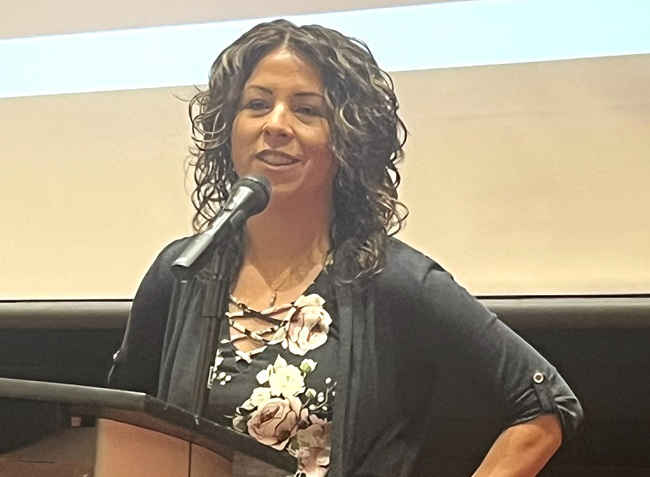
Karen Auger, Wiidooktaagyang’s co-ordinator, spearheads her First Nation’s community-based programming. Auger was one of the featured speakers at an Anishinabek Nation family well-being conference, which was held from July 29-30 at Casino Rama Resort, located in Chippewas of Rama First Nation.
The conference was titled, ‘connection, care, courage’.
Auger collaborates with other Nipissing departments to plan, implement, and support monitor care programs that promote both individual and family strengths and advance well-being.
Wiidooktaagyang has been around for more than a decade. Auger said Nipissing representatives long ago recognized there was a need to support some of its First Nation members with multiple complex needs.
Throughout portions of 2013 and the following year, various frontline staff, managers, leadership representatives, Elders, and community members held meetings to develop the program’s approach and philosophy, and determine resources required to support it.
Auger became a Wiidooktaagyang case manager in 2017 and the program co-ordinator last year.
“When this program first started within Nipissing, we had all of our staff trained, so whether you were working in housing, social services, or facilities and maintenance,” she said, adding they all had the knowledge to assist community members.
That workload fell solely into Auger’s hands when she became Nipissing’s case manager eight years ago. It was quickly realized that additional staff needed to be hired to properly assist all community members.
There are currently various ways for Nipissing members to access the Wiidooktaagyang program.
“Community members can self-refer,” Auger said. “So, they can call us or they can stop by the office.”
Also, others can make a referral on someone’s behalf.
Service integration for Wiikdooktaagyang aims to help those Nipissing members with various needs. Some individuals have chronic needs, while others may have acute health or social concerns. And others need some help as their concerns are impacting others.
Auger said her program is not suited for those who are presenting in crisis. Other Nipissing departments are better equipped to handle these situations. But they can eventually transition to Wiikdooktaagyang services.
The two-day workshop also featured other speakers, workshops, and activities.
Tracy Robinson, whose duties include coordinating Anishinabek Nation’s family well-being program, believes an annual conference attended by frontline workers is extremely beneficial.
“There is so much happening in all of the communities,” Robinson said. “[Workers are dealing with] everything from capacity issues and having to wear many hats, to grief and loss, to struggles with addiction, domestic violence, and mental health.”
Representatives from the Anishinabek Nation, which provides support to 39 First Nations throughout Ontario, recommended frontline family well-being workers get together once a year.
“It’s something we decided would be most effective to have a big annual event, to have a theme, get speakers, do activities, and do the things that would most help,” Robinson said.
Others who attended this year’s conference were Marsha Smoke, Anishinabek Nation’s Southeast Regional Chief, and Stan Cloud, a director with Anishinabek Nation’s Social Development Department, and Koganaawsawin – the coordinating body of the Anishinabek Child, Youth, and Family Well-Being System.
First Nation representatives who also assist with their community’s family well-being work also took part.