

Anishinaabe citizens honoured at Evening of Excellence
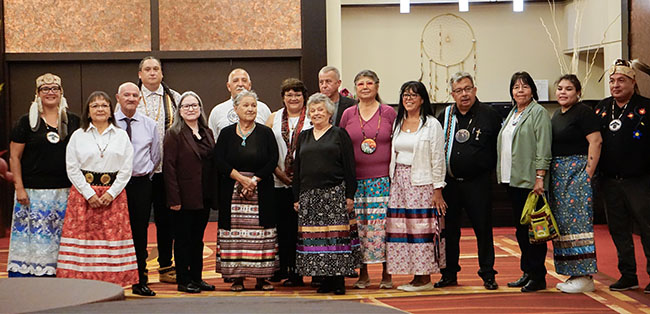
CHIPPEWAS OF RAMA FIRST NATION – Friends, family, and colleagues gathered at Casino Rama in Chippewas of Rama First Nation on August 28, for the Anishinabek Nation 7th Generation Charity annual Evening of Excellence, where 17 deserving Anishinabek Nation citizens received Lifetime Achievement Awards for their outstanding contributions.
The Lifetime Achievement Awards recognize individuals who have made a lifetime commitment to improving the quality of life on First Nations through volunteerism, political service, language preservation, health services, social services, personal achievement, cultural practice, and those who are survivors of Indian Residential School or who served in the military.
2025 Lifetime Achievement Award Recipients:
Darrell Mandamin, Wiikwemkoong Unceded Territory: Darrell has dedicated his entire career to public service through peacekeeping and policing work on behalf of the Wikwemikong Tribal Police Service and the Anishinabek Police Service. He has been a steady, loyal ambassador of the Mukwa Doodem through keeping the community safe.
Throughout his career, he’s always been ready to respond with a calm demeanour in any situation, whether it be a minor incident or situations that are dangerous or traumatic in nature. As you can imagine, in his line of work, he is subjected to many forms of abuse, whether it be physical, mental, verbal, or even spiritual, but he is always responding healthily to ensure the safety of the people involved as well as the community at large. In his role of leadership within the Police Service, he has at times been a mentor to new recruits from First Nations and First Nation Policing.
Andrew McGregor, Whitefish River First Nation: Andrew is a friend, brother, Father, and Grandfather to many, and is known as a source of wisdom, strength, and honour. An Indian Residential School Survivor, he is a man of few words. He has been a lifelong example of hard work, pride, and respect. He is a bridge to the past, whether it be family or community history, sharing his knowledge, stories, and traditions that connect all those who are in his presence. Family is of the utmost importance, always helping those with advice, knowledge, reassurance, or just a helping hand. He is a bridge to family history, sharing stories and family traditions that bring the past to today.
Anne Marie Jones, Garden River First Nation: For over 36 years, Anne Marie has shown an unwavering commitment and dedication to her role within the Garden River First Nation education unit. Meticulously managing numerous files, she demonstrates a remarkable attention to detail and a deep sense of responsibility that fosters trusting and supportive relationships. She’s a valued team player who collaborates seamlessly with her colleagues, enhancing the overall effectiveness of the education unit. Her influence extends beyond Garden River as she actively represents the community on multiple boards and committees, cultivating strong partnerships resulting in positive change and empowerment within the community.
Brian Ziegler, Whitefish River First Nation: Known to most as ‘Chuck’, he has served with distinction for over three decades as a police officer with the United Chiefs and Councils of Manitoulin Anishinaabe Police Service (UCCM APS), consistently demonstrating courage, integrity, and commitment to community.
His journey began in Whitefish River First Nation, where he was raised in a family that instilled in him the values of humility, strength, and fairness. Though his early life was marked by systemic challenges and the impacts of racial discrimination, he emerged from those experiences with deep empathy and an unshakable sense of justice. His life’s work has reflected those lessons, offering protection and compassion to the people he served.
Throughout his 30-year career, he has worn many hats: frontline responder, Scenes of Crime Officer, Traffic Management Officer, Shift Supervisor, and lead investigator in major cases. Each role was approached with the same unwavering dedication to public safety and community well-being. The humanity he brings to the badge is what sets him apart. He has been known to lift the spirits of those around him with quick wit and a well-timed joke, even amid high-stress situations. Behind the uniform is a man deeply committed to family, community, and the next generation.
Danette McGregor, Whitefish River First Nation: Danette is known as an esteemed leader and cultural advocate within her community. For over two decades, she has left an indelible mark on the hearts and minds of countless individuals, shaping the future through her role as an educator at the Maamwe Kendaasing Early Learning and Innovation Centre.
More recently, she has focused on the language. Under her leadership, the Anishinaabemowin program has flourished, becoming a cornerstone of the educational experience at Maamwe Kendaasing. Her work serves as a profound and integral link in the fabric of Anishinabek society, weaving together threads of resilience, cultural revitalization, and intergenerational healing.
Her lifetime work symbolizes a collective journey of resilience, healing, and cultural resurgence for the Anishinabek people. She inspires future generations to embrace their heritage, uphold their traditions, and chart a course towards a brighter, more empowered future.
Dolores Naponse, Atikameksheng Anishnawbek: Dolores is an Indian Residential School Survivor and a well-respected Elder in her community. She is an active member of the Health Committee, where she has been instrumental in promoting a balanced, holistic lifestyle. Through the Committee’s work, she has helped enhance, guide, and promote individual cultural values and principles, leading to personal, family, and community healing for present and future generations.
In 2000, she organized a Diabetes Walk aimed to raise awareness of diabetes in our First Nation. She walked approximately 30 Kilometres a day from the Manitoba border to Ottawa from May to July.
On September 30, 2022, she was selected to throw the “first pitch” at a Toronto Blue Jays game for their acknowledgement of the National Day of Truth and Reconciliation, honouring all Indian Residential School Survivors. She has impacted many people throughout her life. Her charisma, inviting smile, and humility make you feel seen and important. Her dedication, passion, and profound impact on the community have been truly remarkable.
The Late Elizabeth ‘Liza’ Commanda, Nipissing First Nation: Liza was a trailblazer whose achievements in the 1930s brought pride and inspiration to her First Nation at a time when Indigenous representation in public life was exceedingly rare — especially for women.
In 1933, Liza competed in the prestigious Women’s Marathon Swim at the Canadian National Exhibition (C.N.E.) in Toronto. She was the only Indigenous woman to compete in this gruelling 10-mile open water event, which drew international athletes. She trained in the cold, open waters of Lake Nipissing, and carried with her the pride of her people — and the strength of generations before and after her.
Her achievement was not solely athletic. By stepping into a public space as an Indigenous woman in the 1930s, Liza defied both racial and gender barriers. She served as a symbol of strength, ambition, and cultural pride, inspiring younger generations to pursue excellence beyond the boundaries society had placed upon them.
But her greatest legacy goes beyond her athletic accomplishments. Liza endured the deep injustices of her time — systemic racism, and the forced removal of some of her children to Indian Residential School. Despite these hardships, she held her family together with quiet strength and unshakable love. Her perseverance ensured that her grandchildren and great-grandchildren could walk strong in their identities today. We are here because she endured.
Gail ‘Kiki’ McGregor, Whitefish River First Nation: Affectionately known as Kiki, she has served the community in countless roles for over 45 years. She became the youngest-ever member of the WRFN Recreation Committee and has never stopped showing up. She is a co-founder of the Annual Powwow Gathering and remains a key part of its continued success. Whether organizing community events, seasonal solstice ceremonies, baby welcomings, or annual parades, she has been the quiet current behind many of the community’s most meaningful traditions.
Her gifts extend far beyond event coordination — she is a Knowledge Keeper and a spiritual woman whose wisdom profoundly shapes the lives of many, grounding others in Anishinaabe ways of being. Her work with the senior population is especially meaningful, as she brings wellness practices, language, and culturally grounded care to both Elders and clients. Her journey has not been without hardship. Very few can say they have supported their First Nation from youth into their elder years with such constancy and purpose. Gail is a living thread connecting the past to the present — embodying the teachings, values, and spiritual strength of the Anishinabek people. Her work touches every life stage, from birth to death, and her presence is a reminder that tradition, kindness, and hard work can build legacies that last.
Ian Campeau, Nipissing First Nation: At a young age, Ian pursued his love for music. His start as a DJ led him to co-found the group ‘A Tribe Called Red’ in the late 2000s. They changed the way of music by blending electronic music and pow wow music, which became known as Electric Pow Wow. Throughout his 10 years with the group, they enjoyed much success, getting long-listed for Canada’s prestigious Polaris Music Prize and in early 2014, the group was nominated for Breakthrough Group of the Year and Electronic Album of the Year at the Juno Awards, ultimately winning the Juno Award for Breakthrough Group of the Year. In 2017, the group was shortlisted for the Polaris Music Prize and was named Album of the Year at the Independent Music Awards, in addition to opening the Juno Awards gala that year.
Later that year, Ian announced that he was leaving the band, releasing a statement saying, “After almost ten years in A Tribe Called Red, I’ve decided to leave the band and shift my energy to my speaking career, mentorship, and advocacy work…”
And that is exactly what he has done. He has been a strong advocate for Indigenous rights and the Anishinaabemowin language. Moving back to his home community, he has become a positive role model to the youth, connecting with them and working with them to focus on the right path. He is someone they trust to help guide them and provide support through our culture and language.
Jack Brown, Kettle & Stony Point First Nation: Jack has been committed as a water champion for over 30 years. As a certified water operator, educator, and trainer in First Nations across Ontario, he ensures our communities are well advised on needed services. He always goes the extra mile to provide support in obtaining necessary training to promote self-sufficiency and healthy water services.
In addition, he is also a band councillor who has actively contributed to the establishment of his community’s radio station, golf course, and various infrastructure. He wholeheartedly promotes education and living the Anishinaabe way, working tirelessly for the betterment of our communities.
Janet George, Kettle & Stony Point First Nation: Serving her community for over 20 years as their Health Director, she has been instrumental in creating and sustaining the intricate health services program. Her work over the years has included establishing the much-needed Assisted Living Facility, the Mental Health and Wellness Program in addition to various health policies within her community as well as others.
She has been a long-time Board member for the Southern Ontario Health Access Centres and spent time working with the N’Amerind Friendship Centre, exemplifying her desire to not only help within her own community, but also make a difference abroad.
She is a role model, paving a path for others to follow in life and in health, and is always available to those seeking advice in all health matters, sharing her cultural teachings and knowledge.
Keith McCrady, Biinjitiwaabik Zaaging Anishinaabek: True leadership is not simply having a vision, as there is no shortage of good ideas. The real test is the ability to translate that vision into action and meaningful service, and Keith has done this remarkably.
He started his career in child and youth care prior to stepping into the role of executive director at 2 Spirited People of the 1st Nations in 2017. This organization was founded in 1989 to help support 2 Spirited People at risk of or living with HIV/AIDS, Hepatitis C or other co-infections. When he began his role with the organization, there were five full-time staff. Under his leadership since that time, 2 Spirits has grown to over 130 staff and has expanded across the city of Toronto with three satellite offices. It operates the only Indigenous led crisis response service and has plans for expansion to Thunder Bay.
He embodies the qualities of a true leader who lives by the Seven Grandfather Teachings. He is a role model through his honesty, authenticity, courage, and compassion. He focuses on teaching the next generation of advocates how to walk in a good way and be a good ancestor. He has the kindest heart and is always willing to go above and beyond to support the community.
The Late Melvina Corbiere, M’Chigeeng First Nation: A residential school survivor, she often described this experience in a positive way, in the sense that it helped equip her and others with the tools they needed to be leaders of change in First Nation communities.
As a teacher, she inspired many students to achieve their educational goals. With her kind approach, she worked as a peer within the teaching community to help other teachers understand the First Nations people, their systems of governance, language traditions, and culture. She helped break down the barriers of colonialist attitudes towards First Nation people in a positive way.
After many years as a teacher, she became a Principal and Director of Education. During this time, she was instrumental in acquiring control of the M’Chigeeng First Nations Educational system from Indian Affairs Canada, becoming one of the first First Nations in Canada to achieve broad control of their educational system.
She was fluent in Ojibway and had a lifetime of cultural understanding. As an elementary educator, she saw a need for resource development to help teachers with language development. With her educational background and knowledge of curriculum, she worked with the Ojibwe Cultural Foundation and the Kenjigewin Teg Educational Institute to help develop books and curriculum resources in the language. These resources and others were shared with many teachers across the province and around Turtle Island to help those understand and speak Anishinaabemowin.
Many people in many communities today credit Melvina as an integral figure in shaping the First Nation Educational System into what it is today. Her legacy has led many others to follow in her footsteps and become leaders in their own journey. Her love of teaching, dedication to First Nation people, and commitment to her students’ success made her an exceptional educator and we are proud to honour her today with an Anishinabek Lifetime Achievement Award in the category of Education.
Robert Bressette Jr., Kettle & Stony Point First Nation: For more than 20 years, Robert has been a well-respected educator within his community. He is affectionately known as ‘Mr. B’ to both past and present students, for whom he had and continues to have a hand in shaping their outlook and futures through positive reinforcement and instilling belief in their abilities to succeed.
His love of sports has been a guiding light throughout his life, working and volunteering in countless ways within his community and abroad. From coaching to training in multiple sports at multiple levels, he has even won awards for his work as a trainer. He not only makes every effort to encourage, promote pride, self-respect and camaraderie with others, he believes that everyone has potential and the right to self-determination.
Currently, he is the Principle for Hillside School in his community. He has earned the respect and trust of his co-workers and students through the years because of his nature to nurture, support and promote healthy competition, lifestyle and learning.
Steven George, Wiikwemkoong Unceded Territory: Steven has been the local historian for Wiikwemkoong and fellow Anishinaabe communities within the Anishinaabe Territory for many years. Rooted in rich Anishinaabemowin fluency, historical knowledge, and genealogy knowledge, he has been called upon to bridge the past into the present while preparing and building a future. He is often sought for his insight, reference, understanding, and interpretation of Anishinaabemowin.
At the core of being Anishinaabe is language and culture. He demonstrates his retention of culture and language while sharing it with many. His ability to recall and share history helps bridge the divide amongst generations and helps to regain identity in family, and community with the knowledge that people’s identity is integral to the future of the Anishinabek.
The Late Wendy Tyson, Wahnapitae First Nation: Wendy spent over 25 years working for her community, starting as a youth worker, ultimately holding more than 7 different positions throughout her career in addition to serving on numerous committees. She touched every part of her community, whether it was through the work she did in her job, volunteering for events, or fundraising activities, there wasn’t a person in the community from babies through to Elders who didn’t feel the positive impact she had.
The list of things she did is literally too long to mention. She was one of those people that a community is lucky to have who is just everywhere all the time, always helping, always volunteering, always working, always trying to make a positive difference and give her community the best. She brought courage, humility, truth, respect, wisdom, honesty and love to everyone and everything she touched in her community.
The Late Gordon Waindubence, Sheguiandah First Nation: Our next award recipient dedicated his life’s work to the Anishinabek Nation and tonight, we remember and honour, the late former Anishinabek Nation Head Getzit Gordon Waindubence-baa of Sheguiandah First Nation who returned to the Spirit World on November 24, 2021.
In 1997, former Anishinabek Nation Grand Council Chief Vernon Roote-baa offered Elder Gordon tobacco to build a Nation. He accepted but said it would take time. He fasted and received a clear vision for the Anishinabek Nation. He set out to carve the Eagle Staff and would encourage each member First Nation to share an Eagle Feather to represent unity.
He worked tirelessly for over 24 years to build a strong Nation and to guide leadership in this endeavour. He travelled throughout the Nation, sharing his cultural knowledge and gifts with determination in developing a Nation and fostering Ngo Dwe Waangizid Anishinabe – One Anishinaabe Family.
We recognize him for all he has done for the Anishinabek Nation and say “Chi-Miigwech” for the following significant events:
- Appointed as the first head Getzit of the Anishinabek Nation
- Implemented the stand-up election process for the Anishinabek Nation’s leadership and for the Chiefs of Ontario
- Helped create Ngo Dwe Waangizid with Manitoulin Getzidjig
- Created the June 6 Anishinaabe Giizhigad yearly holiday in recognition of the acceptance of the Chi-Naaknigewin by Chiefs-in-Assembly on June 6, 2012.
- Implemented and shared the Doodem (clan) governance system for restoration of jurisdiction in education and governance, which is carried on today by head Getzit Richard Assinewai and Elder Gordon’s son Chop Waindubence
- Taught the importance of engaging with Elders wherever we went
- Built the arbour that stands at the Anishinabek Nation head office
- Gifted an Eagle Feather to Getzit Richard Assinewai to become Head Getzit of the Anishinabek Nation, to carry on the important work that he started and ensure that the Nation was in good hands
- Provided guidance to staff, Anishinabek Chiefs, citizens, and leadership and shared his kindness, built strong friendships, and showed Zaagidwin for us all – Ngo Dwe Waangizid Anishinaabe
To learn more about the Anishinabek Nation 7th Generation Charity, visit www.an7gc.ca