

Resilience baked in Curve Lake First Nation archives, says author of new book
By Kelly Anne Smith
PETERBOROUGH – During the active years of the Curve Lake Indian Day School, community members worked hard to advocate for a better school, says the author of the new book, Students by Day: Colonialism and Resistance at the Curve Lake Indian Day School.
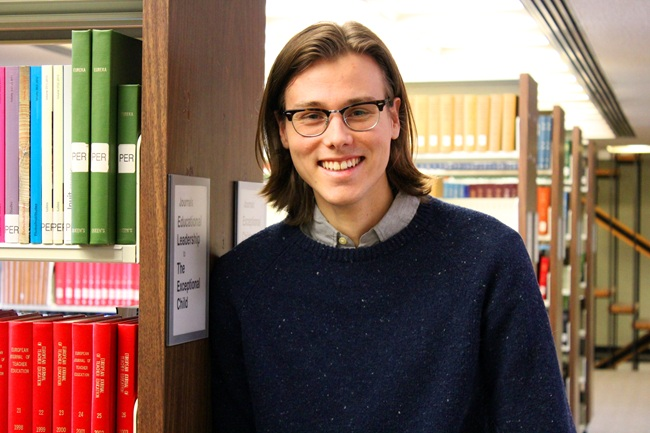
From the Wolf Clan, Jackson Pind is Settler-Anishinaabe with ancestral roots in Alderville First Nation. He is an assistant professor of Indigenous Methodologies in the Chanie Wenjack School of Indigenous Studies at Trent University.
Students by Day: Colonialism and Resistance at the Curve Lake Indian Day School is the first book in Ontario to explore the history of a Day School. After years of delving into the archives and interviewing Survivors, Pind says much work is needed to delve into soon-to-be-released government files.
Pind’s Students by Day: Colonialism and Resistance at the Curve Lake Indian Day School came out of his Ph.D dissertation at Queen’s University over eight years ago. Pind says that not many people heard of Day Schools when he started working with Survivor Raymond Mason, who launched both the Indian Residential School settlements and the Indian Day School settlements in 2009.
“He was from Peguis First Nation. He introduced me to the Day School lawsuit that had not been settled at that time. It wasn’t settled until 2019. It started me on the journey to learn more about the Indian Schools and start uncovering more of the history. I did work with him (as an editor) on his autobiography, which is a story of him attending both a Day School and Residential School.”
Pind then focused on his own territory, where he grew up in Curve Lake First Nation.
“I had some family ties as well as some friend ties into that area, and they were open for me to start looking at that history right around when the settlement first got finalized. Day School Survivors were then left to apply to the lawsuit by themselves, and they needed archival documents.”
Pind started a working relationship with then-Curve Lake First Nation Chief Emily Whetung and Council to search the Library and Archives of Canada.
“And that started the book project. I went through about 10,000 different files there. And then, right when I was trying to pair those archival documents with the oral history that I was really interested in—that’s the students’ experience in the schools—COVID-19 hit, which was clearly unfortunate and forced all the research to go online. That prohibited me from going to the reserve there for almost a year. In some ways, I had to pivot. I had to finish my dissertation in the meantime. When I got hired at Trent, I knew I wanted to finish the oral history.”
During the last few years, Pind has been recording the oral histories of five Survivors who came forward.
“They wanted to talk about their experiences and the book publicly. It’s a difficult history and not everyone feels comfortable talking about that. I wanted to make sure their names were included and that their stories were fully encapsulated within the book. I bridged oral and written history, and with the community’s support as well,” Pind explains. “During that time, there was a new Chief elected, Chief Keith Knott. He wanted to be interviewed for the book. His story is in there as well. They’ve just had an election, so he’s done his term. He was the oldest person in the book that wrapped up a really important chapter near the end. I think it all ties together really nicely.”
When Pind started researching, nobody was talking about the involvement of churches and governments in Day Schools.
“They didn’t want it on their agenda. They were still dealing with the TRC Report (Truth and Reconciliation Commission of Canada) that had just come out. Since the settlement, at the time, [Minister of Indigenous Affairs] Carolyn Bennett did apologize for the government’s role. But so far, none of the churches have made a formal apology.”
In 2022, when Pope Francis came to Canada to apologize for Indian Residential Schools, Pind pressed for Pope Francis to acknowledge the role of the Roman Catholic Church in running the 300 Indian Day Schools across the country.
“So far, they have not acknowledged anything about what happened in the Day School system. I think in many ways, they were concerned for legal reasons. There hasn’t been a full investigation into what really happened in the many Indian Day Schools. I think we need a fuller understanding. I’m trying to push for a TRC commission-like inquiry into the Day Schools as well because more Indigenous students went to a Day School than a Residential School, and we know very little about the typical experience.”
Inequity in education for Indigenous students continues in Canada, says Pind.
“If we look at education in Ontario, in particular, there’s this huge gap still between what happens with a First Nation’s community funding formula for kids on-reserve versus what happens for public school funding right now. And the public school funding is getting cut, but at the same time, it’s about two to three times larger than kids on a reserve.”
The Trent associate professor affirms that the most meaningful part of the research being in the book is to see the resilience baked into the entire archive.
“I thought it was just going to be traumas, records of abuse, and everything that happened, but in reality, a lot of archival documents were actually letters from the community, especially Chief and Council from Curve Lake, all the way back to the start of the files around 1899. They all talk about increasing the wages of teachers, trying to get teachers who speak their language, asking for their own school board because Six Nations had their own board. That was ultimately denied, but they were trying with the agency and power they had at the time to make this school the best they could.”
Pind talks of one memorable story that the people remember about Chief Elsie Knott, the first female chief in Canada.
“She didn’t go to the Day School for the first few years of her life because she was very sick and then really didn’t like the Day School when she started going. So, once she became Chief, she started trying to make kids go to the local public school. She actually bought a funeral hearse and started taking the kids in the Curve Lake community to outside Peterborough in Lakefield. And then she made her own bus lines eventually. And that bus line is still running today to make sure kids could go farther on in their education and not just stop at Grade 3 or 4. That’s just one story the people remembered.”
Pind has positive news about the government currently digitizing six million Day School documents.
“There’s so much more work that needs to be done. Right now, what’s available is about 800,000 documents and the Trudeau government promised $25 million in funds to do that. I’ve been in contact with the folks that are doing that work and they are just wrapping that up right now and hope to be able to get communities access to these documents…The book ends in late 1951. After that, there are privacy restrictions on accessing documents. There’s a lot more history to be told. I’m trying to encourage more people to look at their own community’s history and understand what happened in the Day Schools. There is more that isn’t being talked about.”
Students by Day: Colonialism and Resistance at the Curve Lake Indian Day School by Jackson Pind is available in stores on October 14.