

National Claims Research Workshop marks 35th anniversary
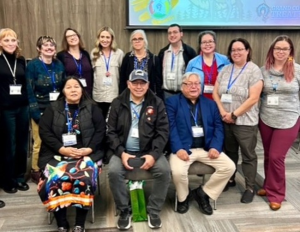
By Laurie Leclair
WINNIPEG – This year marks the 35th anniversary of the National Claims Research Workshop (NCRW), an annual meeting of treaty and claims researchers, lawyers, Chiefs, and other representatives from First Nations and Indigenous associations throughout Canada. Union of British Columbia Chiefs and Indian Councils (UBCIC) organized the event, along with an interprovincial committee of volunteers.
The Grand Council Treaty Three Administrative Services research arm, Treaty and Aboriginal Rights Research Program (GCT3-TARR), hosted the conference, which took place via Zoom and in-person at the Wyndham Gardens, Winnipeg, from October 21-23. This beautiful, art-filled hotel is located on the Long Plains Madison Reserve and is 100 per cent-owned and operated by Long Plains First Nation. At break, attendees could view and purchase beautiful jewellery, books, clothing, and other crafts from vendors set up around the conference.
Elder Don Jones of Nigigoonsiminikaaning First Nation opened the conference with words of welcome. The first day focused on discussions with Crown-Indigenous Relations and Northern Affairs Canada (CIRNA)’s Specific Claims representatives, who were repeatedly challenged by delegates on several issues, including the crushing cuts to research funding, unrealistic reporting times, and CIRNA’s recent maneuvers to fund Independent First Nations at the expense of grants to established Claims Research Units. Conference participants also learned that the proposed research budget for 2026-27 will be further reduced to a debilitating $4 million. While CIRNA did not rule out the possibility of top-ups, this amount is slated to be shared between all independent First Nation research departments and Claims Research Units throughout Canada. As most of those present have had their research plans deferred or derailed by this year’s budget cuts, the collective mood ranged from frustration to anger, especially since the CIRNA delegates were unable to provide any concrete assurances beyond mandated procedures. In years past, the NCRW shaped its presentations and workshops to facilitate the constructive sharing of ideas and experiences, but as Jody Woods, UBCIC Research Director, noted, rather than the usual, the day was spent in an unfortunate but necessary discussion over funding and, in certain cases, the survival of programs and services.
The second day of this three-day conference had a more positive feel as most of the presentations and conversations focused on ground-breaking legal decisions like Southwind v. Canada and United Nations Declaration of the Rights of Indigenous Peoples (UNDRIP), success stories, and methodologies for redress, which move outside of the Specific Claims restrictions. Space was also given to the challenge of redressing harms that cannot be quantified by monetary compensation (e.g., destruction of burial and sacred sites; loss of language, learning, and land-based teaching; the disappearance of trails and access to fishing and harvesting grounds; or the cultural and existential damage done to communities who are forced to relocate and rebuild due to environmental and other impacts).
Both Woods and Morgan Chapman (Havlik Consulting Group) and their team are to be commended for the thematic organization of the three days, as presentations moved from the big picture of funding challenges to examples of recent legal strides and positive results, to the final day’s look at the intricacies of research. Following a candid discussion about predatory lawyers and research firms, the delegates were treated to an introductory tour and reception at the Archives of Manitoba.
Through the efforts of Hereditary Mi’kmaq Grand Council Chief Stephen Augustine, Ovide Mercredi was in attendance on the last day and delivered a quiet but impassioned closing talk, warning us to be wary of kimotiskak, or those who would act like thieves – both literally and existentially.
“You have no idea how important you are to us,” he said, speaking to the researchers directly, both Indigenous and allies.
It was the perfect inspiration for this group as it tries to navigate the next few uncertain years. Elder Don Jones was called on again to close the conference, making several references back to Dr. Mercredi’s words.
Relevant links: