

Healing through grief: Supporting those journeying back to the Spirit World
By Rick Garrick
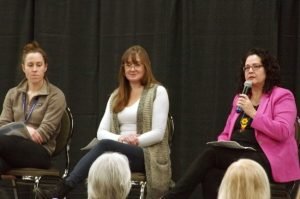
THUNDER BAY — Red Rock Indian Band’s Holly Prince spoke about supporting people journeying back to the Spirit World during Hospice Northwest’s Healing through Grief Conference, held Nov. 18 at the Superior Inn in Thunder Bay. Prince, lead of the Indigenous People’s Health and Aging Division at the Centre for Education and Research on Aging and Health at Lakehead University, was one of the panellists on the Seeing Grief Through Different Lenses panel at the conference.
“We work with Indigenous peoples right across Canada to respond to their needs in the areas of research as well as education, but I have a particular interest and focus on supporting people who are journeying back to Spirit World, and I would say for myself that is both a deeply personal experience, as well as it’s become my professional passion,” Prince says, noting that she has seen a real disconnect for Indigenous peoples on what that journey back to Spirit World looked like. “So, I began working in this space of end of life and palliative care to figure out how I could support that journey, and in the 20 years that I’ve been working in the field of palliative care I’ve had the opportunity and great privilege of working with many people across this country that we now call Canada, including caring for my own mother in my own home in the City of Thunder Bay as she journeyed at end of life.”
Prince says she recognized how difficult palliative care was when she was with her mother at end of life.
“And I thought that if it was this difficult for me, as somebody who had all this knowledge and skills and experiences and people, what did that look like for Indigenous peoples who lived in the far, remote north or who didn’t have access to the same type of services that I did,” Prince says.
Prince adds that she learned from an Elder that they live every day of their lives in grief as Indigenous people.
“As I think about that, I think about all those things around colonization and the loss of our land and the loss of our language and the loss of our children, that continues in the current day system of child welfare, think about the impacts of the Residential School System, the fact that I’m speaking to you in English and not my traditional language,” Prince says. “So in addition to all of those losses that we experience due to chronic disease and illnesses, which are really high in Indigenous communities, diabetes is considered an epidemic; we live every day of our lives in grief.”
The conference also featured four concurrent workshops on Grief Yoga; Grief and Self Care; Understanding Emotions in Grief; and Moving Mindfully Through Grief.
“Today is National Grief and Bereavement Day, so we’re helping to celebrate and recognize and acknowledge grief for people in Thunder Bay and northwestern Ontario,” says Janet Fairbridge, executive director at Hospice Northwest. “Grief is universal and it’s something that we all experience in many different ways and shapes and forms, and part of what we’re trying to do today is to help give people the tools and coping strategies to work with grief, to deal with grief, and to be able to help normalize conversations around grief.”
Red Rock Indian Band’s Ron Kanutski, who did the opening and closing ceremonies at the conference, says one of the things he learned at the conference is that when dealing with grief, it’s not about equality, it’s about equity.
“Everybody doesn’t need the same thing or everybody shouldn’t get the same thing; it’s about what is it that they actually need — that was very powerful for me today,” Kanutski says. “The other piece that I learned today is movement is important in dealing with grief and loss, and just doing some simple exercises here today, it was a yoga program, I felt a lot of emotion and a lot of power in that movement, so it was moving feelings and moving body, moving spirit, and that also was very powerful.”