

Lakehead Region Conservation Authority unveils newly-established Indigenous Community Medicine Garden
By Rick Garrick
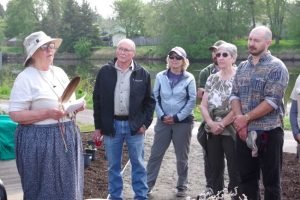
THUNDER BAY — Red Rock Indian Band’s Cindy Crowe led the opening ceremony for the Lakehead Region Conservation Authority’s (LRCA) newly-established Indigenous Community Medicine Garden on June 5 in Thunder Bay. The garden, which is located next to the Balmoral St. bridge over the Neebing-McIntyre Floodway, offers space for reflection, healing, and for Indigenous plants to flourish and re-naturalize the location.
“It is a very beautiful location and I think it’s such a wonderful way to honour the families that have lost loved ones in this river and in other waterways in the Thunder Bay area and a beautiful way to honour the land,” Crowe says. “Thinking about the spirit of reconciliation, this is a really powerful statement and I really congratulate the LRCA for doing what you’re doing and continuing to host and accommodate families that want to have events here.”
Ashley Brimmell, stewardship coordinator at LRCA, thanked everyone for coming together for the opening ceremony and to help plant the garden.
“We’re very grateful to be a part of bringing this new garden to life and to be here today to break ground together as we re-naturalize this space with native plants, including traditional foods and some great medicines,” Brimmell says. “I would like to extend a huge thanks to Cindy Crowe for the beautiful opening ceremony that she provided for us today and for helping us to conceptualize this garden, thank you so much.”
Brimmell also thanked Gail Bannon, culture and mountain coordinator at Fort William, for their consultation on the planting list for the garden, and Shelby Gagnon, an Aroland citizen and Indigenous food coordinator at the Food Action Network who provided support from the Food Action Network and will be helping with the signage for the garden and a community collaboration painting project on the bench that is located in the centre of the garden later this summer.
“The intent of this space is to offer a space for healing and reflection for the Indigenous community to honour lives that have been taken in our community,” Brimmell says. “We have all native plants being put into the ground here today, they’re all native to northwestern Ontario — we have the four medicines going into the garden, sage, cedar, sweetgrass, and we have been gifted some tobacco from Nokiiwin Tribal Council, so we’re very grateful for that.”
Gagnon says it was awesome to be involved with the Indigenous Community Medicine Garden project.
“I think food and medicines are so important, and we need to learn how to plant, to garden, to harvest medicines in a good way and use those medicines and share them in the community,” Gagnon says. “Food is so important, especially in the time we are living, with food prices, with health concerns in the community, so it’s really special for this opening.”
Gagnon looks forward to helping with the artwork for the garden.
“Through my role as an artist, I will be coming in to help do a community collaboration painting project on the bench that is in the centre here, as well as some of the signage that’s going to be displayed in the garden,” Gagnon says.
Lisa Lester, a Biinjitiwaabik Zaaging Anishinaabek citizen, enjoyed helping out with the planting of the garden.
“It’s a great opportunity to connect with community and to learn about different plants and habitats,” Lester says. “I think it’s great that they included a Knowledge Keeper or Elder in guiding us in the right way. I’ve always loved planting. I always do a garden every year, so to me, it’s always relaxing and therapeutic for myself, connecting to the land and connecting with people and having conversations.”