

Anishinabek Nation statement on the Northern Shield Energy Corridor
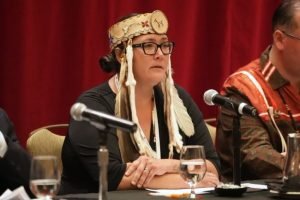
ANISHINABEK NATION TERRITORY (July 8, 2026) – On behalf of the Anishinabek Nation, Grand Council Chief Linda Debassige expresses concerns surrounding the recent announcement by the Governments of Ontario and Alberta of the proposed Northern Shield Energy Corridor that would bring oil from Alberta to refining facilities in Ontario, using a route exclusively within Canada.
“We express our deep concern and disappointment in the Province of Ontario regarding the proposed Northern Shield Energy Corridor and pipeline. This corridor would have the pipeline beginning in Hardisty, Alberta, and extending 3,300 kilometres to Sarnia, Ontario, an industrial hub with three refineries and extensive pipeline infrastructure, transporting up to 500,000 barrels of oil daily. This project represents a significant threat to our land, water, and future generations.
It is alarming that this announcement has blindsided First Nations, as no meaningful discussions or consultations took place before its public reveal yesterday. Historically, we have observed time and time again that First Nations are treated as an afterthought by governments, and their representatives only want to engage in discussions after we assert our inherent and Treaty rights. Recent court decisions have failed to alter this pattern of disregard, further substantiating the observation of Tecumseh in 1810, who stated that newcomers ‘are never contented but always encroaching.’ The assault on Treaty territories by governments that unilaterally decide what, where, and when they can do as they please must stop, and greater respect needs to be given by the Crown and its representatives to its Treaty partners. If they will not listen to their own courts, perhaps it’s time for direct action by rights holders of this land.
While this unilaterally developed project would ‘reduce Canada’s reliance on foreign markets and create more capacity and redundancy for existing pipelines’ and ‘strengthen national security and domestic supply chains’, it weakens the relationship with Treaty partners. We reemphasize that major infrastructure projects that cross First Nations’ traditional territory must include meaningful engagement, consent, and respect for all First Nations along the project corridors.
The plans to expand capacity to 800,000 barrels per day only heighten our concerns about the environmental and social impacts of this pipeline. As the Premier of Manitoba Wab Kinew aptly stated, ‘You can’t do nation-building without the First Nations of this land’. We call on governments to respect our sovereignty, engage in genuine dialogue, and recognize that the future of our lands and communities must be at the heart of any decision regarding resource development. We will continue to stand firm in defence of our rights, environment, and our way of life.”
Linda Debassige
E’ntami-niigaanzid Gimaa (Grand Council Chief)
Anishinabek Nation