

Anishinabek Nation hosts 2026 Water Gathering focusing on protecting Nibi and strengthening Great Lakes stewardship
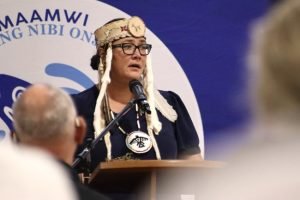
AAMJIWNAANG FIRST NATION (July 21, 2026) — The Anishinabek Nation hosts the second annual Water Gathering: Gchi-Gami Maamwi Nweshkdaading Nibi Onji (Great Lakes Gathering – For the Sake of Water) to bring together First Nation leaders, Elders, youth, Knowledge Holders, water practitioners, researchers, and partners from across the Great Lakes region to advance Nibi (water) protection through the sharing of Indigenous knowledge, Western science, and collaborative action.
“Chi-miigwech to our Anishinabek First Nations leaders, citizens, and key partners for gathering together this week to share knowledge, explore diverse perspectives, and build respectful relationships that advance our shared commitment to support and protect Nibi for future generations,” states Anishinabek Nation Grand Council Chief Linda Debassige. “Nibi is life — it sustains our people, lands and ecosystems, cultures, and future generations. The Water Gathering creates opportunities for participants to learn from one another, strengthen relationships and create new ones, and discuss pressing water issues affecting Anishinabek First Nations and the broader Great Lakes watershed.”
The three-day Gathering will feature Sunrise Ceremonies, presentations from Indigenous and technical experts, youth and Elders panels, and discussions on climate change, environmental monitoring, source water protection, fisheries stewardship, and Great Lakes governance. Participants will also have opportunities to connect through networking, cultural demonstrations, and community dialogue.
Additionally, the Gathering will honour the contributions of the Anishinabek Nation Women’s Water Commission and the Chief Water Commissioners, while recognizing the next chapter in water governance within the Anishinabek Nation, and will also hold a Water Walk and Water Ceremony.
Established in 2007, the Women’s Water Commission provided leadership on water protection and Great Lakes issues. Grandmother Josephine Mandamin-baa led the Commission until 2019, raising awareness of the importance of protecting the Great Lakes and leading the Traditional Naming of Water Bodies within the Anishinabek Nation project. In 2019, Autumn Peltier was appointed to the role of Chief Water Commissioner, where she continued to advocate for clean water and First Nation water rights until the end of her term in 2024.
“This Gathering honours the legacy of the Women’s Water Commission and marks the transition of its advisory role to the Nation Council, which will continue to support water stewardship, traditional teachings, and the protection of our Great Lakes and waterways for generations to come,” states Grand Council Chief Debassige. “The Water Walk reminds us that clean water cannot be taken for granted. It calls on all of us to honour our responsibility as stewards and to protect the waters that connect and sustain our communities. Through the Water Walk, we raise awareness, inspire action, and reaffirm our commitment to protect Nibi for all beings and for future generations.”
“In Aamjiwnaang Territory, the Water Walk reflects the First Nation’s ongoing commitment to protecting Nibi in the face of environmental challenges. It is both a sacred ceremony and a powerful act of advocacy, ensuring that water has a voice,” states Anishinabek Nation Deputy Grand Council Chief Chris Plain. “Miigwech to the members of the Anishinabek Nation Women’s Water Commission and our Chief Water Commissioners, past and present, for your leadership and dedication to protecting Nibi. Your work has strengthened awareness of water issues and inspired action to safeguard this sacred resource.”
The Water Gathering will close with reflections, Anishinaabemowin teachings on Nibi, and a ceremonial return of the water, reaffirming the sacred relationship between Anishinaabe peoples and the waters that sustain all life.