

Founder of First Nations coffee company shares knowledge at Toronto conference
By Sam Laskaris
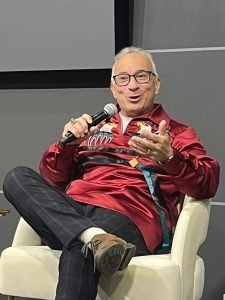
TORONTO – Mark Marsolais-Nahwegahbow knows a thing or two about running a successful business. Marsolais-Nahwegahbow, a citizen of Whitefish River First Nation who founded Birch Bark Coffee Company in 2018, does not mind sharing advice with those who are also hoping that their business can prosper.
Marsolais-Nahwegahbow passed along some of his words of wisdom at the Rezolution Summit, which was held August 11-12 at the TMX Market Centre in downtown Toronto.
He was a panellist on a session titled The Exit Strategy Before the Entry Strategy, which provided information on what business founders need to plan before they scale.
“I had to decide whether or not I wanted to scale up or just stay local,” said Marsolais-Nahwegahbow, who now lives in Ottawa. “The importance for me was when I was building this business was to see where I wanted this business to be. And I’ve always focused on that. I knew there was going to be barriers, but it was really important for me to build a legacy.”
His coffees, which are available in numerous blends, have become a huge hit and can be found extensively in various retail stores, restaurants, cafes, and offices across Canada. His list of impressive clients continues to grow.
“I think before building quickly, you really have to understand what you’re getting into and you have to really prepare,” Marsolais-Nahwegahbow said. “And I think the number one thing is having a purpose. Why did you create your business? Was it to give back to the community? Was it to have income for your family? So, you have to write these all down.”
He added he’s a huge believer in vision boards.
“I’ve done three of them,” he said. “And I can tell you that about 90 per cent of what I put on that board has come true. The mind can conceive and believe, and the mind can achieve. So, focus on what you want. If you want to scale up, prepare yourself because it’s like driving a boat. It’s a rocky road, and you’ve got to be ready for it.”
Marsolais-Nahwegahbow also believes entrepreneurs contemplating decisions should reach out to fellow businesspeople, including himself.
“Don’t be shy to reach out to them to learn because my mistakes can help you when there’s a fork in the road,” he said. “It could help you not go down those bad roads. And it might help you go down the right road. So, I think that’s really important.”
For those who do experience plenty of growth with their business, other vital choices will need to be made.
“If you want to do partnerships or bring investors, you really have to sit down and think about this and if you are willing to give up your decision-making,” he said. “Are you willing to give up why you started your business, because these are realities. And you have to stay focused on what your purpose is.”
Marsolais-Nahwegahbow said other companies or investors will come knocking when a business achieves a certain level. They will, in some cases, offer big money, but he believes one must analyze carefully what is being sought in return.
“And that’s why you have to really sit down and think about this,” he said. “And while it’s exciting, you need that gap time to sit back and give me a month to think about this. And then, consult with people because that could change your life; that could change your business, negative and/or positive.”
Though Birch Bark has become a financial success, Marsolais-Nahwegahbow said the reason he launched his company was different than perhaps others.
“I think a lot of people can agree that for Indigenous businesses, it’s never about making money,” he said. “I think we have a really good understanding that we always want to give back to our communities. And the values and beliefs, which are centred on the Seven Grandfather Teachings, for me, is what I base my business on. And I strive to really focus on that.”
This thinking can translate into other positive impacts.
“I think the most important part is when you focus on that, it kind of resonates with other people and reflects on other people and actually it kind of rubs off on other people when you share your story,” he said.
Marsolais-Nahwegahbow also said it’s important for an entrepreneur to decide whether to be a sole proprietor or a corporation and if board members should be added, in which case, several people will be involved in decision-making.
“I made the decision not to take money from people and build my business from just the ground up,” he said. “And I thought it was very important.”