

Opinion: Harris name still spells tragedy
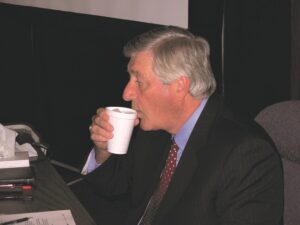
During his four days of testimony in February 2006, Harris denied responsibility for sending a police tactical unit into Ipperwash Park Sept. 6, 1995, which eventually led to an OPP sniper shooting and killing unarmed land defender Dudley George.
By Maurice Switzer
Most people of my generation can remember where they were when word reached them about certain public tragedies, like the Kennedy assassination, or the shocking events of 9/11.
That’s the type of jolt that I experienced the morning of Sept 7, 1995, when a CBC radio bulletin reported that Anthony Dudley George – a 38-year-old Chippewa man – had been shot to death the previous night at Ipperwash Provincial Park, not by a lone gunman, or a terrorist cell, but by an Ontario Provincial Police (OPP) sergeant.
George was certainly not a celebrity, unknown outside his southwest Ontario community of Kettle and Stony Point First Nation, but Indian Country is a tight-knit world where just about everyone feels related.
Freshly retired from the daily newspaper industry, that event prompted me to look for ways to offset the systemic racism so evident at the time in media coverage of Indigenous issues. Barely a year later, we were launching an Aboriginal Media program – first of its kind in Canada – at First Nations Technical Institute on Tyendinaga Mohawk Territory.
Our guest presenter in that September’s first class was Maynard Sam George, Dudley’s older brother who had smudged his lifeless body in Strathroy Hospital where he had been driven by brother Pierre and sister Caroline after the horrific events of Sept. 6. In 2009, lung cancer brought an end to Sam’s respectful but relentless campaign to find the truth behind the chaotic confrontation that resulted in his unarmed brother’s death after being shot by an OPP sniper. Mike Harris’s Conservative government had stubbornly stonewalled requests for a public inquiry, which was only accomplished after Harris was ousted as party leader and a Liberal government was in place at Queen’s Park.
In his report released following the two-year inquiry, Justice Sidney Linden concluded that Harris’ anger over the Ipperwash occupation resulted in his utterance to cabinet members that he wanted “the f*****g Indians out of the park.” The inquiry commissioner found that Harris’ actions made it more likely that the tragedy occurred.
Last year, Harris was on the Nipissing University and Canadore College campus in North Bay to present a donation on behalf of the Joyce Foundation; this was the latest donation of other people’s money that Harris has used as part of an apparent legacy-building process.
The first came in 2010 when campus partners Nipissing University and Canadore College approved naming their new $25 million library after Harris, a North Bay ski instructor and golf course professional before becoming Ontario Premier.
The $1.5 million donation by Harris’ friend Seymour Schulich for naming rights has been described as “puny” by anonymous administrators, but the amount was all that was needed to complete the fundraising campaign.
University staff and students continue to be critical of their library bearing the name of a man associated with the first death of a First Nation protester in an Ontario land claim dispute in over a century. Harris’ reputation was also sullied by an inquiry’s findings about the deaths of seven citizens of Walkerton due to an unregulated public water system.
The university’s Indigenous Council on Education, which represents the interests of First Nations and Indigenous communities that send their youth to study on the North Bay campus, has had zero response to formal and informal requests that the issue be addressed by president Kevin Wamsley and the board of governors. Persistent controversy about the library name figured prominently in a report by a consulting firm hired by the university to examine diversity, equity, and inclusion issues on the campus.
Former Anishinabek Nation Grand Council Chief Patrick Madahbee summed up Indigenous reactions when he issued a media release saying that “It would be more appropriate to name a rifle range after Mike Harris than a library.”
Nipissing First Nation leaders have been especially offended by the library issue, citing a history of insulting actions by Harris when he was Minister of Natural Resources, and reminding president Wamsley that his university bears their community’s name.
It has been 31 years since land defender Dudley George died because Mike Harris wanted the Indians out of a park. All the Indians want is his name off a place that contributes to higher learning.
About the Author
Maurice Switzer is chair of Nipissing University’s Indigenous Council on Education.