

Responsible Gambling Council keynote to explore gambling’s impact on Indigenous health and wellness
By Rick Garrick
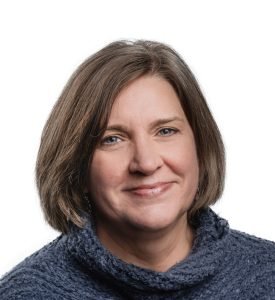
TORONTO — The Responsible Gambling Council’s Jennifer Reynolds looks forward to delivering her keynote address on Gambling in a Changing World: Reflections on Indigenous Health, Wellness, and Community at the 12th Annual Anishinabek Nation Health Conference.
Reynolds, Associate Director, Research and Knowledge Mobilization at the Responsible Gambling Council, is scheduled to deliver her keynote on the second day of the conference, which is being held on October 27-29 at the Quattro Hotel and Conference Centre in Sault Ste. Marie.
“I’m looking at the complexity of gambling within many communities — it can be connected to recreation, social relationships, but the flip side is that it can also produce serious financial, emotional, family, and community harms,” Reynolds says. “So basically, my presentation is going to be talking about examining the gambling landscape, in particular online and sports betting and how those evolved, looking at community impacts, looking at protective factors, help seeking and support, and then kind of summarizing it all with respect for opportunities for prevention, and in particular how communities, health systems, [and] health leaders can support the wellness and respond to the changing environment that we see with respect to gambling.”
Reynolds, whose work focuses on gambling-related harms, public health approaches to prevention, online gambling, sports betting, and community wellness, has more than 20 years of experience in gambling research, prevention, and knowledge mobilization.
“One of the things we are seeing within the research, and in particular the research that I’ve done with respect to online and sports betting, is that we’re seeing elevated gambling risk among Indigenous respondents,” Reynolds says. “Indigenous identity itself is not an explanation, but we need to look at the broader context including the financial stress, discrimination, the effects of settler colonialism, access to gambling, and then ultimately whether culturally relevant support is available, so we are seeing elevated gambling numbers within Indigenous respondents.”
Reynolds says people now have access to gambling 24 hours a day, seven days a week.
“And you can do it while no one sees you, you could be on your phone betting and we would not know,” Reynolds says. “It’s become a lot more hidden, but it’s more accessible, it’s more rampant.”
Reynolds adds that advertising about gambling is a huge problem.
“Advertising makes gambling look fun, accessible, easy — easy wins,” Reynolds says. “So, it’s shaping everything right now, we’re 100 per cent connected so when you want those rapid sort of dopamine hits, you can get it very easily in gambling.”
Reynolds says there needs to be more awareness of how different communities understand gambling.
“One of the things we do at the Responsible Gambling Council is we’ve learned that culturally relevant prevention simply doesn’t mean taking an existing message and translating it,” Reynolds says. “It’s really about working and building deeper relationships with various communities so that prevention starts with the understanding of community realities, strengths, and priorities, so it’s really starting to bring together community knowledge and community lived experience … to develop and understand how prevention can start to counter what we’re seeing environmentally and how do we deliver those messages to communities.”
The conference also features four other keynote speakers: Dr. Alexa Lesperance on Menopause, Hormone Changes in the Life Cycle; Trevor Stratton on Walk with Me: Pathways to Health; Dr. Nicole Redvers, ND, on Centering Earth Planetary Health; and Pamela Toulouse on Indigenous Cultural Safety in Health.
A range of workshops are also featured during the conference, including Kathleen Bartlett and Bethany Bocchinfuso on Supporting the Journey Home: Growing the Community Bundle to Care for those with Serious Illness; Dave Rice (Miinakamii) on Healing the Male Spirit; Wes Whetung on Breaking the Cycle: A Journey of Healing for Men; Ophelia O’Donnell on Caring for Ourselves as We Care for Others; Liz Osawamick on Spirit First: Re-Connecting to Creation in the Helping Field; Kyra Follis on Understanding the Role of Gut Health in our Holistic Health; and Keith Knott on Living the Good Life.