

Mushquash stresses healing and resilience in supporting students
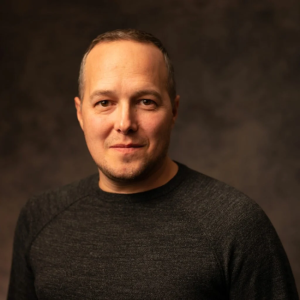
By Rick Garrick
THUNDER BAY — Pays Plat First Nation’s Chris Mushquash stressed the importance of providing support for individuals in need during the Anishinabek Education System’s Creating Culturally Respectful Behaviour and Safety Plans lunch and learn session on October 19. The session was held for educators, support staff, administrators, and other people who were interested in creating more culturally respectful and strengths-based approaches to supporting learners.
“If you’ve been to these meetings before, you will know that what we try to do is shift away from asking questions like, ‘What’s wrong with this kid,’ and really thinking about what’s happened, what is happening, what support is needed, is there context for this, what’s going on around a young person that might be precipitating what we are seeing,” says Mushquash, Canada Research Chair in Indigenous Mental Health and Addiction, Professor at Lakehead University, Psychologist at Dilico Anishinabek Family Care, and Chief Scientist at Thunder Bay Regional Health Research Institute. “We want to move away from controlling someone’s behaviour to supporting someone’s safety, supporting skills development, to supporting belonging and participation, again, there’s that note that not everything we see is due to trauma. Some things we see are due to trauma but not necessarily all things that we see.”
Mushquash says it is important to recognize historic and contemporary context as well.
“Oftentimes, education is described as the great equalizer — if you work really hard and you do your very best and you spend as much time getting educated as possible, you can become whatever it is you’d like to be,” Mushquash says. “But that’s not the history of Residential School and educational disruption in First Nations more broadly — school wasn’t the great equalizer, school wasn’t the pathway into a different area of expertise or opportunity that was laid out for you. So, we have to recognize that, we all know the history of Residential Schools, we all know even the nature of educational experiences contemporarily, so we have to kind of hold that in our minds that education can be a great equalizer, but it hasn’t been used that way necessarily and it’s not been the experience of many First Nations people.”
Mushquash says when a child is experiencing difficulties in school, it’s possible that their parents did not necessarily have a great experience in the school system as well.
“So, inequity and discrimination, general mistrust of some of these institutions may fall naturally from the experience that a family has had throughout their generations of first having an education system imposed upon them, but then second, and more recently, having an education system that may not be meeting a broader need,” Mushquash says. “We also have to think about strengths and self-determination and community leadership, all of these things are very important.”
Mushquash says when people are experiencing a difficulty in life, they tend to lean upon what they have the most capacity in.
“So, it’s very important to have that kind of general framework in mind, but as well once people can develop some success in an area, they develop some confidence in that area, some self-efficacy,” Mushquash says. “We know that self-efficacy is a very important psychological construct when it comes to behavioural change, in fact it’s the most important psychological construct. So, it’s through those pathways of strength and resilience that we can then help to form an identity around something that is adaptive rather than around something that might be maladaptive.”
Mushquash adds that adverse childhood experiences differentially lead to varied outcomes when it comes to executive functions.
“So, when you think about the ability to self-regulate as an executive function, if there is early adversity that disrupts those developmental capacities, then certainly that needs to be looked at and addressed,” Mushquash says. “We know that even from an epigenetic standpoint, Aboriginal experiences can affect stress response across generations. We know this largely from mothers who experience hardships throughout pregnancy or earlier adverse childhood experiences that have sort of affected their own stress responses, some of that can be transmitted to their own children as well.”
Mushquash says he often talks about how individuals aren’t islands unto themselves that exist as completely unique and independent of everyone around them.
“In fact, the biological literature is showing that we are affected by those things, but again, it’s not 100 per cent perfect accordance, it’s that we are individuals who come from long lines of individuals and will hopefully contribute to long lines of individuals after us and we are the sort of sum total of all those biological variations and experiences at this point in time,” Mushquash says.
Mushquash stresses that although the literature shows that the effect sizes can be quite large when it comes to future difficulties in a range of areas, it is not destiny.
“The capacity for people to heal is immense,” Mushquash says. “I’m amazed by it every single day, so we can’t think of these things as being the way it’s going to be.”