

Stranded in Sudbury: Released without a way home
A mother searches for answers years after son’s death
Trigger warning: readers may be triggered by the recount of suicide, drugs, and overdose. To access a 24-hour National Crisis Line, call: 1-866-925-4419. Community Assistance Program (CAP) can be accessed for citizens of the Anishinabek Nation: 1-800-663-1142.

By Carley Lambert
THUNDER BAY — Kirstine Baccar was expecting her son Jordon to make his way home to Thunder Bay in September 2021 following his release from custody in Penetanguishene.
Tragically, he never returned home to his family. After being released from custody and left stranded for hundreds of kilometres from home without money, identification, medication, or a clear path for getting back to his family for days, he died of an overdose.
Five years later, Baccar, a citizen of Red Rock Indian Band, is still trying to understand why her son was left there when it was understood he was vulnerable and what could have been done differently.
Jordon had been held at the Penetanguishene Central North Correctional Centre after being charged in Thunder Bay jurisdiction. Baccar recounts that during a court hearing in August 2021, the presiding judge ordered that he be returned to Thunder Bay for his next hearing in September.
At the September 7 virtual hearing, Jordon was released with his mother acting as his surety. Baccar says she expected that as part of his release, he would be transported to Thunder Bay where she could then pick him up.
But he was only brought as far as Sudbury.
With absolute clarity, she recounts the details of the last moments of him. At around 5:30 p.m., she received a frantic call from her son who told her that he had been left at the Sudbury bus station and a bus would not be available for another two days.
He was over 1,100 kilometres from home.
“He had no money. He had no clothes. He had none of his medication. He wasn’t feeling good,” Baccar says.
With no way to get to Sudbury immediately, she contacted her sister in Thunder Bay, who sent Jordon money through Western Union; however, he had no identification to collect it. After multiple calls and attempts to arrange a way for him to access the money, it was finally received five hours after his initial call.
When they touched base again, he told his mother that he had bought some essentials—sinus medication, underwear, undershirts, and a backpack—at Walmart. He also mentioned that he was having Gatorade and pizza, giving his mother some relief that he had what he needed to get through the night, but the fear of him running into the wrong company while vulnerable always weighed heavily.
She asked him to call her before he got on the bus so she would know he was on his way home.
Jordon told his mother he would and that he could not wait to get home and go fishing with his brothers.
That was the last time they spoke.
On the morning of September 9, 2021, Baccar’s mother’s intuition was fully engaged, telling her that something was wrong with her son. After hours of not hearing from Jordon, and several calls to any likely place he could end up, her worst nightmare became a reality. She received confirmation that he died of an overdose while in Sudbury.
Baccar says she later learned that a bus attendant had told the local police that because there was no bus scheduled for two days, Jordon could not be left at the station. She says she was told that the police’s response was, “He’s on his own recognizance, not my issue.”
Those circumstances, and the questions around his release, have haunted her.
Baccar says she tried to obtain a copy of the police report to understand what happened but was told the information could not be released because the matter was still under investigation. She also says she has not been able to get answers from her son’s lawyer.
“I just want to know why he was left there, why was there not a plan?” she says, acknowledging that this is more a systemic issue that extends beyond her and her family.
Baccar says that she has since heard from over 40 people who told her their loved ones had also been left in cities far from home after being released from custody. Some have died, while others remain missing or have experienced homelessness.
Understanding that the issue is bigger than what happened to Jordon, Baccar wants to see better planning and support for people leaving the justice system, particularly those experiencing mental health and addiction challenges. She believes release plans need to involve organizations that can help people find housing, access treatment, and reconnect with their communities—a multidisciplinary approach. For someone without a safe place to go, she questions whether release should happen before appropriate supports are arranged.
“It’s about…putting dollars in to support the transition from being in the justice system and now getting integrated or reintegrated back into society…If they don’t have a safe place to go, then they should be keeping them in the jail to ensure that the appropriate transition is happening.”
Jordon’s struggles began long before his final days in Sudbury.
Baccar recounts his trauma and mental health challenges from a young age that led to attempted suicide when he was 12 years old and drug use around 14-15 years old, which she believes was largely an attempt to cope with what he was experiencing. She secured counselling, treatment, and other supports for him, but often found the systems difficult to navigate. Jordon entered treatment six times, but as a teenager, he had the right to refuse services even when she was trying to get him help.
His first incarceration came at 21, after he had robbed a store with a BB gun and took $30 and some snacks, which resulted in a federal prison sentence. Baccar says the experience was further damaging, as Jordon witnessed extreme violence in prison. A former guard who met Jordon at Stony Mountain Penitentiary in Manitoba later told her Jordon did not belong in that environment, believing he needed mental health and addiction supports instead.
He was not defined by his history; Baccar wants people to know that her son was more than his struggles.
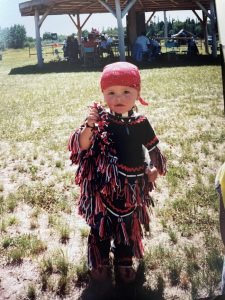
He was connected to the land and his culture from a young age. He began drumming, dancing, and singing when he was just two years old. He loved hunting, fishing, and trapping and would share what he gathered with Elders and community members who could no longer get out on the land.
“He was just a very generous person. He would give the shirt off his back to anyone,” she recounts, adding that he was funny, respectful, and someone who would take in any animal that needed help.
His loss has had a lasting impact on the family. With Jordon being nine years older than his brother, Darien, not only was he his big brother and best friend, but also a father figure. Baccar says his death has deeply affected Darien, who was 18 at the time.
She remembers the moment she learned her son would not be coming home as expected.
“We were waiting for him to come through the door, you know, and he came through my kitchen window in a casket five days after he was supposed to arrive home.”
Despite her profound grief and frustration with the systems that failed her son, Baccar continues to push for answers and supports an inquest into Jordon’s death.
“This inquest isn’t going to do anything for me. It’s not going to bring back my child. It’s not going to hold anybody responsible for his death. It’s not going to pay for the cost of his funeral and all of, you know, my son’s mental health issues and my mental health issues and my other son’s, you know, issues. It’s not going to do anything for me and my family, but ultimately, it could save somebody’s life in the future. And that’s the only, only reason that I’m still continuing to push this for, because believe me, I’ve wanted to give up so many freaking times.”
She says her goal is simple.
“There were mistakes made, and I just need those rectified. Holding somebody accountable was never my goal; it was about changing it so nobody else has to face this.”
For Baccar, an inquest is an opportunity to have the circumstances surrounding her son’s death examined and get answers to longstanding questions, and hopefully lead to changes that protect other families from similar loss.
Baccar shares Jordon’s story to effect change, including in the documentary, A Sobering Story, which explores addiction and gaps in support services. The film is available to stream for free on YouTube, helping amplify Jordon’s story and learn about the challenges families face when affected by addiction.
Baccar hopes people will take the time to watch and help break stigmas by challenging and dismantling stereotypes, judgments, and negative beliefs that surround those living with addiction and mental health challenges and recognize the role that trauma and lack of support can play.
“They’re real people. They have stories; they have loved ones that are waiting for them…They’re people,” she says. “A little empathy goes a long way.”